
Category Archives: Introverted Leadership

  • 1
Roxy Greninger

Episode 015: Roxy Greninger–Growing Your Circle

Category:introversion,Introverted Leadership,introverts,Podcast,STC,STC Rochester

Episode 015 Show Notes: Roxy Greninger

Introduction

Roxy Greninger

Roxy Greninger and Ben Woelk discuss Roxy’s work with Growing Your Circle and her experience at Spectrum 2018 of finding her tribe.  

Key concepts

  • Grow Your Circle
  • Outgoing introverts
  • Unexpected benefits of attending a conference

Quotable

I think that people don’t always have a clear definition of what an introvert is. So if you ask just a random person, what would they picture? They picture someone who’s quiet, maybe shy, definitely afraid of public speaking, and that’s not the case for me.

“What are you doing on this planet? What do you want to leave behind or how do you want to be remembered?” And you kind of start to ask yourself more thought-provoking questions around that. What are your strengths? And then you build upon that circle. So you are at the center of your circle, and then the people that surround you are the various layers of that circle, and the influence that they have on you.

So many people came up and talked to me afterwards and really talked to me during the course of the conference, that I started to get an understanding how important it was for introverts to understand that they were okay. There was nothing wrong with them for being introverts, but also to understand that there were more of them, that there was a sense of tribal group, or a circle in some ways as well.–Ben

Think about different people and the influence that they have on your circle, it could come and go. You could see them once a year, you could see them once in your lifetime, but they leave that resonating impact on that ring of your circle.

By all accounts, we want to be different, we want to be unique, but it’s wired into us to find similarities and develop our tribe. It’s a safety mechanism. It’s just natural that you want to feel similar to others, and not be the outsider.

Resources or Products Mentioned in this Episode

Links

Transcript

Ben:  Joining us today is Roxy Greninger. Roxy Works for Excellus Blue Cross Blue Shield as a Culture Program Consultant. Roxy describes herself as Texas-born, Oregon-raised, and New York-refined. I met Roxy at the STC Rochester Spectrum Conference where she presented on Growing Your Circle. Roxy has since joined the Society for Technical Communication and is co-Vice President and 2019 Spectrum Conference co-chair. Roxy was also the catalyst for starting the Hope for the Introvert podcast, but we’ll talk about that a bit later. Roxy blogs at www.RoxyLorraine.Com. You can contact Roxy on Linkedin or at RoxyLorraine@Gmail.com.

Ben: Hi Roxy. I’m so excited you’re joining us today. We’ve had some fascinating and far ranging conversations and I look forward to seeing where we go today.

Roxy: Hey Ben. Thanks for having me. I’m excited to be on Hope for the Introvert.

Ben: Absolutely! So Roxy, you’ve mentioned to me that people are often surprised that you’re an introvert. Why is that?

Roxy: I think that people don’t always have a clear definition of what an introvert is. So if you ask just a random person, what would they picture? They picture someone who’s quiet, maybe shy, definitely afraid of public speaking, and that’s not the case for me. So I call myself an outgoing introvert. So for me it’s more–I love being around people, I love talking to people, but it doesn’t give me a charge. It actually drains me. So at the end of the day I need to be kind to myself and have some quiet time for reflection or artwork. Just recharging really. I’d call it recharge my batteries.

[bctt tweet=” People don’t always have a clear definition of what an introvert is. What would a random person picture? They picture someone who’s quiet, maybe shy, definitely afraid of public speaking, and that’s not the case for me.–Roxy” username=”hopeintrovert”]

Ben: Yeah. And that’s pretty typical for an introvert. Needing that time to recharge. It seems to be THE thing that makes a difference between extroverts and introverts. So when did you actually discover or decide that you were an introvert and how did that make you feel? What has the journey been like?

Roxy: It was about eight years ago during an Art of Leadership workshop here at Excellus, and during that time we took a number of assessments to learn about ourselves, which I found to be the most beneficial activity I’ve ever done. You would think, after 30 some odd years, you know yourself, but you really don’t. And having done that assessment, we learned if we were an introvert or an extrovert, our communication styles, which was also very helpful. And our strengths, right? So we use the five Strengths–StrengthsFinders 2.0 to learn about ourselves and how we work with others. So for me it was very affirming to know that I was an introvert, and that I wasn’t weird or that there was something wrong with me, if you will, that I felt so tired or a little withdrawn after extensive periods of time with people. And also to realize that there were other people like me was very affirming.

Ben: Well, that’s awesome.

Roxy:The affirmation that being–finding out that you’re an introvert–has on you, and anytime that I’m sure you, having led presentations on introversion, you’ll probably find or recognize that people come up to you afterwards and say, “Wow! That really meant something to me.” And being in a room full of other people who are similar is so important. Some of my favorite readings are just based on human behavior and why we have that need to feel the same. We by all accounts, we want to be different, we want to be unique, but it’s wired into us to find similarities and develop our tribe. It’s a safety mechanism. It’s just natural that you want to feel similar to others, and not be the outsider.

[bctt tweet=”By all accounts, we want to be different, we want to be unique, but it’s wired into us to find similarities and develop our tribe.–Roxy Greninger” username=”hopeintrovert”]

Ben: Yeah, I think that makes a lot of sense. And it’s interesting because I first presented on introversion–I first presented several years ago with a friend of mine–but I presented on it back in the spring of 2016 and I had that same experience that you’re talking about. So many people came up and talked to me afterwards and really talked to me during the course of the conference, that I started to get an understanding how important it was for introverts to understand that they were okay. There was nothing wrong with them for being introverts, but also to understand that there were more of them, that there was a sense of tribal group, or a circle in some ways as well.

[bctt tweet=”So many people came up and talked to me afterwards and really talked to me during the course of the conference, that I started to get an understanding how important it was for introverts to understand that they were okay.” username=”hopeintrovert”]

Ben: Now, when you spoke at Spectrum, you actually spoke during our leadership program and you spoke on Grow Your Circle, which is something that you’ve been working on. Can you talk a little bit about that? It was very well received by the attendees at the conference and I think it would be exciting for them to know what you’re working on.

Roxy: Yeah. I’m fascinated again, by development of people. I’m starting with myself back in 2010. So this idea came to me when we talk about developing your–growing your tribe. (Building your tribe is, I think, one saying in the community.) Networking is another term that people use. And so what I started to find out about wellness and well being,  when you boil everything down, it really needs to start with you. You need to know yourself and you need to know what drives you, in order to know what motivates you, in order to succeed and feel fulfillment and purpose in this life. So when I spoke, the grow your circle is just that you start with you and you ask yourself, it sounds like an easy question, but it’s a really hard question to answer…

Roxy: “What are you doing on this planet? What do you want to leave behind or how do you want to be remembered?” And you kind of start to ask yourself more thought-provoking questions around that. What are your strengths? And then you build upon that circle. So you are at the center of your circle, and then the people that surround you are the various layers of that circle, and the influence that they have on you. So you’ve got another ring of of emotional and physical, which is met by–you have doctors and specialists that are helping with your physical well being. Maybe you have a fitness coach, you’ve got emotional support from your parents, from your siblings, your family, and others. And then there’s another layer of the ring which is career and financial stability, which aren’t necessarily the same, but they certainly can go hand in hand whether you’re self employed or employed by someone else. And whether you’re wealthy or not wealthy, it’s your comfort level with your financial situation, your financial wellness.

[bctt tweet=”What are you doing on this planet? What do you want to leave behind or how do you want to be remembered?” username=”hopeintrovert”]

Roxy: The final ring is social and community. And that’s the biggest ring. That’s where your friends are. That’s where your neighbors are. So when you think about different people and the influence that they have on your circle, it could come and go. You could see them once a year, you could see them once in your lifetime, but they leave that resonating impact on that ring of your circle. It’s also important to think about if you’re trying to hang on to people in your circle because you feel like you’re required to or obligated to. Are they really helping or having a positive influence on you, or are you able to just say they’ve brought me joy and, and maybe your paths–it’s time to part ways, right?

[bctt tweet=”Think about different people and the influence that they have on your circle, it could come and go. You could see them once a year, you could see them once in your lifetime, but they leave that resonating impact on that ring of your circle. ” username=”hopeintrovert”]

Roxy:  So that’s really helpful when you have that circle fully developed. You’re able to maximize your potential. And other people struggle with adding more folks to their circle. Right? So what I spoke about at the conference was there are other ways to grow your circle. You can follow a favorite author or celebrity and they influence you, right? So if you watch TV or if you read books,  or if you follow a celebrity on social media, Instagram, Snapchat, Facebook, Twitter, they buy a product and you find yourself buying a product, you better bet you’re being influenced by them. It’s things like that to think about who’s influencing you and is it a positive influence, is it an influence towards your purpose and what you’re trying to accomplish in this life and it’s going to fluctuate.

Ben: You know, I love the idea of the resonating impact. It could be for good or for bad as well.

Roxy: Absolutely!

Ben: But it’s really interesting thinking about just that ongoing sound. Essentially you are having an impact in your life because they’ve–hard to find the words around this, and I think of it more of a pebble. Throwing the pebble in the water and the ripples spreading out. But this is more of the sense of they’ve struck the bell and the peal just kind of continues for awhile.

Roxy: Absolutely!

Ben: So I think it’s a pretty cool analogy and an interesting way to look at it.

Roxy: It’s very helpful to realize that this is not limited to the work life or the personal life, right? This is you. This is your circle. This is 24/7. I think a lot of development programs focus on you within the walls of your workplace or they focus on, you know, self help you outside the workplace. And that’s where they fall short, that you’re not looking at your overall self. And a lot of people are in an unhealthy situation, whether it’s mentally unhealthy or physically unhealthy. They’re working themselves so hard that they’re finding that they have heart disease or stress or anxiety, and all these things, you know catch up to you. And I think in the presentation I referenced, just like when you’re on the airplane and the flight attendant tells you that you have to put your mask on yourself first. If you want to help anybody else, you really do.

Roxy:That rings true with grow your circle. Like you need to look at yourself first and not think about, you know, what decisions you’ve made that have been influenced by, let’s say your parents, right? That’s sometimes the hardest one because they’re your parents, or other influencers like your boss–are you doing work that you love doing or are the assignments that you’re doing, you’re doing them because that’s what you’re being told to do? Or do you feel that you are bringing a passion and meaning to purpose? To the world? So that’s where people get hung up in they find a little depression or demotivation with particular jobs. And that for me overlaps with my work at Excellus, which is why I love thinking about these things outside of the workplace as well as inside the workplace.

Ben: I felt like it was a very well received presentation and it’s funny because I connected with you at the conference and we did a follow-up conversation later. There just seems to be so much of interest to discuss together. But, you’ve also stepped into a leadership role in an organization that you had not had any real familiarity with prior to that. And I’m curious about why you agreed to do that.

Roxy: Yeah. I was–I was shocked. I didn’t know that STC was a thing [laughing]. So I was–I was delighted. I was asked by one of the other co-chairs if I had some content that I’d be willing to present, and I was kind of excited to try and be given the opportunity to try something new, try some content that I hadn’t presented before and this was that opportunity. And after the presentation, I admittedly was kind of surprised there weren’t a lot of questions in the room, but I should have guessed that it was probably primarily a room full of introverts. Each one of those guests came up to me afterwards to say in which ways the presentation connected with them and/or resonated with them. And I was blown away and I’m just shocked that I didn’t know that the Society for Technical Communication existed.

Roxy: And as I had the opportunity to sit through the different presenters, they were speaking my language, they’re reading the same books that I read and they’re talking about technologies that I’m interested in. Sometimes I find myself in a situation at work where my colleagues–they appreciate that I read as much as I do or that I have information about new technology coming out. But you know, that that’s me. They look to me and say, “That’s great. That’s Roxy.” But here’s a whole bunch of Roxy’s, right? I mean, it was–it was unique. We’re all different, you know, it was, it was fulfilling and it was energizing to be with people that had another layer of similarities and wanted to connect with me.

Roxy, I think I had like 20 LinkedIn requests the first day and it’s such a diverse group of people that I just walked away feeling tired, yes, from being around people, but also very energized by, you know, the amount of input and I’m learning that those are a few of my strengths out of the five strengths. So for me that fulfilled a piece of my strengths, that I look for. And so when it was brought to my attention that there was an opportunity to be a leader in the role, I–I hesitated at first because I don’t want to just jump in and have too many things that I’m juggling, but I really thought that I might be able to bring a different perspective and diversify the chapter thinking a little bit, because I do have a marketing background. I’m not a traditional technical writer. I’ve written documentation for our company– training documentation. I do have an IT degree but I’m not in an IT role now. So I thought that that would bring a different perspective to the chapter and the way we do things and maybe just help lead some positive change.

Ben: Yeah, I think there’s some great opportunities there and it’s funny you talk about how you were energized being around the people and still very tired at the end of the day from doing that. But that’s kind of been my experience with this organization and another organization I’m involved with, that as I’ve established relationships, the opportunity to essentially hang out with that group of people is just great and I find that I don’t want to give that up, and I end up being totally, totally exhausted by the time I finally do. But it’s one of those things, It’s probably not the right analogy, but a candle can only burn brightly for so long and then you need to–really terrible analogy, and that it needs to rest for awhile–which again, terrible analogy. So we’re replacing the wick, whatever you want to call it, needs both. Obviously. a flashlight needs to recharge the batteries and that’s the introvert analogy that usually works with that!

Extras
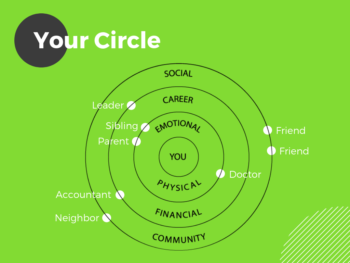
Grow Your Circle Presentation

Grow Your Circle diagram


  • 1
Ben Woelk Headshot

Episode 014: Ben Woelk–Lessons Learned on an Introvert’s Journey to Leadership

Category:EDUCAUSE,introversion,Introverted Leadership,introverts,Leadership,Lessons Learned,personality,Podcast

Episode 014 Show Notes: Ben Woelk

Introduction

Ben Woelk discusses lessons learned on his introvert’s journey to leadership. This post is based on an article previously published on October 17, 2016 in the EDUCAUSE Review: The Professional Commons Blog and on benwoelk.com.

Key concepts

  • Self understanding is the key for being a good leader
  • Identify and harness your introvert strengths
  • Growing in leadership comes from practicing leadership
  • In networking, depth is more important than breadth

Quotable

My introversion informs my approach to leadership, and I’ve found that self-understanding has helped me learn how to harness my strengths as an introvert to become an influential leader and to achieve great results.

My willingness to accept volunteer tasks has enabled me to share ideas and develop my leadership abilities.

I had to see something on paper stating that I could be a leader before I could accept that ability. I needed the affirmation.

Teams often follow leaders who express their ideas confidently and quickly, neither of which are guarantors that the ideas are actually good.

You won’t grow in leadership if you don’t take advantage of opportunities to practice leadership.

Don’t avoid networking events. You don’t have to meet and engage in small talk with everyone. Find one or two people with whom to have an in-depth conversation, and follow up later. Depth is more important than breadth.

Resources or Products Mentioned in this Episode

Links

Transcript

Many of us might agree that Western society lauds extroverted leaders and their accomplishments. However, introverts make great contributions and can be effective leaders too. As IT professionals, many of you are introverts, and you certainly work with a lot of introverts. Those of us who are introverts may not believe or recognize that we have strong leadership skills, and we certainly don’t seem like the extroverted leaders that are the norm in Western society.

I’m an introverted leader, despite outward appearances. I’ve presented at conferences numerous times, and overall, I’m able to mix well in business settings. Many people who see me in that very public context are surprised that I’m an introvert. My introversion informs my approach to leadership, and I’ve found that self-understanding has helped me learn how to harness my strengths as an introvert to become an influential leader and to achieve great results.

[bctt tweet=”My introversion informs my approach to leadership, and I’ve found that self-understanding has helped me learn how to harness my strengths as an introvert to become an influential leader and to achieve great results.” username=”hopeintrovert”]

I thought it might be helpful to share a bit of my journey to leadership, to talk about what’s worked for me, and to provide strategies for both discovering your introvert strengths and maximizing them in your workplaces.

First Things First: What’s an Introvert?

Please regard this section as a generalization constructed from a number of sources. Introversion and extroversion lie along a spectrum. Individuals may be more or less extroverted or introverted. It’s also important to note that social anxiety or fear of public speaking does not necessarily mean that someone is introverted. (Many articles and discussions state that public speaking is the number-one fear for most people.)

For the purposes of this blog post, I’ll characterize extroverts and introverts as follows:

  • Extroverts focus on the outer world of people and things. They tend to be active and have a wide breadth of interests. They understand things through experience. They may be reward seekers and desire fame. They are energized by contact and activities undertaken with others.
  • Introverts have a rich inward-looking life of ideas. They tend to have a depth of interest, preferring specialization to a breadth of knowledge. They may mull over thoughts and concepts, but not express those thoughts verbally or externally. Introverts recharge themselves by withdrawing from the hubbub to places of quiet and solitude.

Reading these descriptions, can you see where you might fit on the spectrum?

Applying Introverted Strengths to Leadership

There are many approaches to leadership, and we often hear about highly extroverted, “take charge” leaders who have very public presences. However, as Susan Cain and others have pointed out, there’s no correlation between success in leadership and extroversion. Examples of introverted leaders include Albert Einstein, Steve Wozniak, and Abraham Lincoln. What made them good leaders? In what ways were they influential?

  • Einstein was known for his depth and clarity of thought (and his genius). He had the ability to look at all angles to a problem and develop innovative (and often unexpected) solutions.
  • Wozniak was responsible for many of Apple’s innovations, even though Steve Jobs was the best-known leader and public spokesperson for Apple. Working outside the limelight, Wozniak was able to engineer technological breakthroughs. Together, Jobs and Wozniak arguably revolutionized the end-user computing experience.
  • Lincoln was not gregarious and certainly not known as a compelling public speaker. Yet he was a deep strategic thinker and provided leadership during what may have been the most trying times for the United States.

All were introverted leaders, and all were very effective.

My Background

I’ve had a career that spans many disciplines, including a stint as a doctoral student in early modern European history, a technical communicator, and an information security practitioner. (I took a rather circuitous route to my current position as program manager in the Information Security Office at the Rochester Institute of Technology.)

As a doctoral student, I tended to be very reticent in classes, not wanting to contribute to discussions in which I was sure everyone else was much more knowledgeable.

In my work as a technical communicator, I documented ISO 9000 processes, created hardware and software documentation, and eventually moved into a consulting position where I had responsibility for end-user communications for an IT organization in a local Fortune 500 company.

As a security awareness professional, I communicate to my campus community about information security issues and threats, develop training courses in digital self-defense, and contribute to the greater information security community through my Introverted Leadership Blog and the EDUCAUSE HEISC Awareness and Training Working Group(HEISC is the Higher Education Information Security Council).

I didn’t seek leadership positions and preferred to remain in the background. The last place I wanted to be was the center of attention with colleagues looking to me for direction. Happily, my willingness to accept volunteer tasks has enabled me to share ideas and develop my leadership abilities.

[bctt tweet=”My willingness to accept volunteer tasks has enabled me to share ideas and develop my leadership abilities.” username=”hopeintrovert”]

My Transformation into a Leader

Although there are many formative steps I could look back on, the steps below have probably helped me the most.

Gaining a Better Understanding of Introversion

I read Cain’s book Quiet shortly after it came out. I found her research and discussion around various facets of introversion in American culture to be compelling. Leveraging her work and other sources, I co-presented on the subject of introverted leadership at a few conferences. The topic was popular, and we had standing-room-only crowds. At that point, I realized that this subject was of great interest to my professional colleagues, both in technical communication and in information security. I was intrigued and did further research into what it meant to be an introvert who was also a leader.

Understanding My Personality/Temperament Type

There are various tools for determining your personality/temperament type and many resources discussing the leadership styles most appropriate to those types. Around the time I stepped into a leadership role, I became acquainted with the Myers-Briggs Type Indicator (MBTI) and the work of David Keirsey on temperament. I’m not going to give an in-depth description of MBTI or temperament here. In short, the MBTI and similar tests provide a series of questions; your responses group you into specific personality or temperament types: Introvert/Extravert; iNtuitive/Sensing; Thinking/Feeling; Judging/Perceiving. The types, which are identified through the four pairs, are not distributed evenly throughout the population. The results fall along a continuum, so not every INTJ will be the same. (Obviously, we’re more complex than a four-letter descriptor can convey.)

I’m an INTJ (Introverted-iNtuitive-Thinking-Judging). Keirsey describes the INTJ as a Mastermind. (Others assign the term Scientist to this combination of traits.) Finding out I was an INTJ was important to me because the description affirmed my ability to lead (albeit reluctantly), discussed my strengths and weaknesses, and provided strategies for success as a leader. I had to see something on paper stating that I could be a leader before I could accept that ability. I needed the affirmation. There are times I feel like the Scarecrow in The Wizard of Oz, needing a diploma (or confirmation in print) to prove to myself that I have a brain.

[bctt tweet=”I had to see something on paper stating that I could be a leader before I could accept that ability. I needed the affirmation. ” username=”hopeintrovert”]

Understanding How I Communicate and Work Best

[bctt tweet=”By and large, introverts are not comfortable being asked to give an immediate response to suggestions, nor do they enjoy engaging in small talk.” username=”hopeintrovert”]

By and large, introverts are not comfortable being asked to give an immediate response to suggestions, nor do they enjoy engaging in small talk. I’m not at my best when asked to provide an on-the-spot answer to how I might handle a specific problem or an idea for the best way to move forward. However, when given time, I can respond with a well-thought-out and nuanced response. I’ve also found that I communicate best in writing, although my oral communication skills have become stronger over time and I’m now a seasoned presenter.

I prefer to work individually, and my work is not necessarily done at a steady pace. I enjoy “collisions” with other thinkers, but I prefer not to work in teams. Teams often follow leaders who express their ideas confidently and quickly, neither of which are guarantors that the ideas are actually good. Individual conversations, on the other hand, can often lead to breakthroughs and innovations.

[bctt tweet=”Teams often follow leaders who express their ideas confidently and quickly, neither of which are guarantors that the ideas are actually good.” username=”hopeintrovert”]

Building on Small Successes

I’ve had many opportunities to grow in leadership, but they’ve occurred primarily outside of my professional work environment and often in nonprofit organizations, which are always looking for competent and dedicated volunteers. For me, that leadership path has been through two organizations: the Society for Technical Communication (STC), an international organization devoted to furthering technical communication and educating its members; and the EDUCAUSE HEISC. As I volunteered in STC, I was asked to serve in a variety of positions with increasing responsibilities. I was eventually elected president of the Rochester Chapter and later served on the board of directors at the international level. For HEISC, I served as co-chair of the Awareness and Training Working Group. In that role, I’ve had the opportunity to facilitate a group of talented information security professionals.

[bctt tweet=”I didn’t seek leadership positions in these organizations, but for almost every opportunity presented to me, I’ve said “yes.”” username=”hopeintrovert”]

I didn’t seek leadership positions in these organizations, but for almost every opportunity presented to me, I’ve said “yes.” I’ve also asked myself: “How can I make a difference in the organization?” (Say “yes” when given an opportunity to serve. You won’t grow in leadership if you don’t take advantage of opportunities to practice leadership.)

[bctt tweet=”You won’t grow in leadership if you don’t take advantage of opportunities to practice leadership.” username=”hopeintrovert”]

Making It Personal: Examining My Strengths and Growth Opportunities

From my discussion above, it’s clear that self-discovery has been an important component in how I’ve learned to harness my introvert strengths and become a leader. From my readings about personality/temperament and my experience as a leader, I’ve discovered that my strengths include my ability to identify gaps, my desire to make a difference, my commitment to practicing a servant leadership model, and my drive to pursue excellence. I’m also competitive. (That competitiveness can be both a strength and a weakness. I can push myself and others toward goals. However, I also have an innate desire to win at whatever I’m engaged in.)

Self-discovery also means you uncover your weaknesses, or growth opportunities. For me, those growth opportunities include overcoming my desire to avoid conflict, pushing past my reticence to contribute in discussions, not overanalyzing opportunities or situations before moving forward, and harnessing my competitiveness.

Where Do You Go from Here?

I recommend the following activities to help you uncover and actualize your introvert strengths and become an influencer.

  • Get to know yourself. Take one of the personality or temperament assessments offered at Keirsey.com, HumanMetrics, or 16 Personalities. Read Quiet and some of the other introversion resources listed below.
  • Control your environment. If you’re in an open-plan office, find ways to define your personal space to increase your ability to stay focused. (See Morgan, 5 Ways, for some great ideas.)
  • Communicate your value. Keep a record of your accomplishments and make sure your management understands how you communicate and work best and how you can add the most value. Take advantage of the unhurried nature of social media to leverage the playing field by using the opportunity to clearly articulate your thoughts.
  • Leverage your introversion. You have tremendous abilities to provide superior solutions because, given sufficient time, you can often see all facets of a problem and devise a comprehensive solution.
  • Don’t avoid networking events. You don’t have to meet and engage in small talk with everyone. Find one or two people with whom to have an in-depth conversation, and follow up later. Depth is more important than breadth.
  • Recharge (in solitude) as needed!

[bctt tweet=”Don’t avoid networking events. You don’t have to meet and engage in small talk with everyone. Find one or two people with whom to have an in-depth conversation, and follow up later. Depth is more important than breadth.” username=”hopeintrovert”]

Conclusion

By no means do I consider myself to have “arrived,” but I am surprised by how far I’ve been willing to journey in the last ten years as I’ve leveraged my introversion to lead in a way that’s natural for me. I hope the thoughts above can help stimulate your thinking about how you can leverage your introversion — and also leverage the strengths of the introverts you manage (and make them happier members of the workforce).

You’ve read a bit of my story. If you’re an introvert, what has been your experience in the workplace? If you’re an extrovert, how have you worked successfully with introverts both as their colleague and as their manager? What strategies have worked for you? Please join the conversation. I’d love to hear your stories!

Resources

Cain, Susan. Quiet: The Power of Introverts in a World That Can’t Stop Talking. New York: Crown Publishers, 2012.

Kahnweiler, Jennifer B. The Introverted Leader: Building on Your Quiet Strength. 2nd edition. San Francisco: Berrett-Koehler Publishers, 2018.

Keirsey, David. Please Understand Me II: Temperament, Character, Intelligence. Delmar, CA: Prometheus Nemesis Book Company, 1998.

Laney, Marti Olsen. The Introvert Advantage: How to Thrive in an Extrovert World. New York: Workman Publishing Company, 2002.

Morgan, Elan. “5 Ways to Love Your Open-Plan Office.” Quiet Revolution.

Myers, Isabel Briggs, and Peter B. Myers. Gifts Differing. Palo Alto, CA: Consulting Psychologists Press, 1980.

Petrilli, Lisa. The Introvert’s Guide to Success in Business and Leadership. Chicago: C-Level Strategies, 2011.

Extras

Ben recently keynoted the fall 2018 TCUK Conference in Daventry, England with this topic. You can find audio-visual recordings of Lessons Learned on an Introvert’s Journey to Leadership at https://benwoelk.com/audio-and-video/ and presentations at https://www.slideshare.net/bwoelk.


  • 0

Episode 013: Helen Harbord–Acting, Presenting, and Improv

Category:introversion,Introverted Leadership,Leadership,personality,Podcast

Episode 013 Show Notes: Helen Harbord

Introduction

Helen Harbord and Ben Woelk discuss the differences between doing presentations, acting, and the value of improv training.  

Key concepts

  • Acting is not the same as presenting
  • The value of improv training
  • The value of professional organizations
  • Being yourself
  • Talking to two or three is easier than talking to one

Quotable

I think the thing with acting–the big big thing that I think there’s a misconception about, is that when you’re acting, you’re not being yourself really. If you’re acting a part, you’re being a character.

Whether I’m comfortable or not, and I will play that role, and at a conference, I’ll look like an extrovert very often to people, but when I have the option and have a choice, I just would not get out. I would be reticent. I would be sitting back, I would be observing–Ben

Being a good actor is so much about being good at observing and just seeing how people behave, what they do and then obviously being able to mimic it, but if you don’t have that observation part at the beginning, you’re not really going to get anywhere. And I think that is something that comes much more naturally to introvert people.

I think improv is just brilliant. I’ve done bits of it, but I love it. It’s kind of terrifying and just exhilarating all at the same time. Ah, yeah, like you say, and I think it’s really useful. It’s taught me… Well, what’s it taught me? It’s taught me all sorts of stuff which is useful as you say, with communication. I think it teaches you not to overthink things, which introverts are slightly prone to. It teaches you just to get on with it. Say what you’re thinking. It teaches you to really commit. So if you decide, you know, you’ve made your choice in improv, you stood up and you’ve made yourself a tree or whatever it is you’re going to do, and then you have to really go with it. You can’t change your mind or waiver. You have to be strong. So I think that’s a really useful thing to and it also encourages you to see things from different angles, not just the obvious angle.

I think the most important thing is to work out who you are and just really be yourself. I think you have to be true to yourself and you have to bring the bits of you that are positive to the job, onto the role, and not let yourself be defined by the thought that you may be an introvert

Resources or Products Mentioned in this Episode

Links

Transcript

Ben: Welcome back, Helen. We’re chatting today about some of the challenges you face in the workplace and one of the things that we’ve been discussing offline a little bit, is whether or not you do presentations. Many of the previous guests who identify very strongly as introverts do present, but they also find they have a good deal of discomfort with it. But they had some ideas around it and I’m curious because you’re clearly very well spoken. You’ve provided in your bio that you do voice-over work and acting and things like that, which are obviously very public and you’re speaking in front of people, but from what you’ve told me that you aren’t really doing very much in terms of presentations. I’d like to explore that a little bit. How come you’re not doing presentations?

Helen: [Laughing] Well, it’s a very good question. I suppose for one thing, I don’t need to do them at work, so the need doesn’t come up. It’s not like a thing though, I’ve said, “Oh, well I’m not doing that.” It just literally hasn’t really really come up. I mean, I’ll do mini-presentations. I’ll do presentations to my team, but they’re kind of like friends, so that doesn’t really feel like a scary thing particularly. But yeah, I think the thing with acting–the big big thing that I think there’s a misconception about–is that when you’re acting, you’re not being yourself really. If you’re acting a part, you’re being a character. And not only that, you are basically doing what you’ve been told to do by the director. You’ve been told, well you may not have been told how to do it, but you–you’ve done something, and the director said, “Oh, a bit more like this, a bit more like that.” So it’s not really–It’s not you. It might be your skill and your ability, but it’s not you presenting. And I think that that just makes all the difference. In a performance, you’re expected to speak because you’re acting a part. Everybody’s expecting you to say something. Whereas if you’re at work, not in a presentation world, but just at work, you’re not necessarily expected to speak. So, people don’t–I don’t know–I mean people sort of don’t–there’s no pressure on you to say stuff. Whereas when you’re acting, yeah it’s just not you. I’m not explaining that very well, but you know what I mean.

[bctt tweet=”On presentations–I think the thing with acting–the big big thing that I think there’s a misconception about, is that when you’re acting, you’re not being yourself really. If you’re acting a part, you’re being a character. ” username=”hopeintrovert”]

Ben: I think I get what you’re saying is that you’re playing a role when you’re acting, and you’re not…In some ways playing that part, you’re not–you’re not vulnerable when you’re up there speaking because you’re actually doing these specific–maybe specific lines or maybe just a certain way that you do things. What I’ve found interesting for myself, when I speak at a conference, I don’t know how much–I’ve done it enough times now, so I’m not totally freaked out by it, though I still get very nervous beforehand and I really want to go hide right afterwards, if I have an opportunity just to settle down and recoup some energy. But I found at least in terms of my involvement in professional organizations, if I’m at a meeting, the last thing I really want to do is go up and introduce myself to people or try to have conversations which may feel like small talk or something like that–just minor topics. But I’ve found that when I go into an event and I’m there as a representative–say I’m going in as vice president of such and such, I know full well that there’s a role I need to play, whether I’m comfortable or not, and I will play that role, and at a conference, I’ll look like an extrovert very often to people, but when I have the option and have a choice, I just would not get out. I would be reticent. I would be sitting back, I would be observing, I would not be up introducing myself to people I don’t know at all. So there is very much a discomfort level, but I think it’s the same thing as, I know I have this role to play. And that part’s been interesting. Do you ever present at conferences or anything?

[bctt tweet=”Whether I’m comfortable or not, I will play that role, and at a conference, I’ll look like an extrovert very often to people, but when I have the option, I just would not get out. I would be reticent. I would be sitting back, I would be observing.” username=”hopeintrovert”]

Helen: No, I never have done. But I must admit the thought does fill me with terror. But I would. I think again it’s like you’re saying, you’re passionate about a subject and you genuinely think that you have information to impart to somebody that would be useful for them, then I think it would be fine. I think if you focus on that thing and not on yourself, then I think it’s fine too, and as you say, you have a role. You have a reason to be there. You’ve got a subject immediately there to talk about. I think it would be good, but no, I don’t. I mean–one of the things–one of the–it does backfire sometimes this acting thing, because I think people do assume that you will be brilliant at presenting and that you will love to do it. I definitely don’t have a particular desire to do it.

Helen: I do have the instinct to run away. When you say that, I do just think, “Ah. No. No. No.” And I think even with acting, I much prefer camera work. I’m very, very happy to act to a camera, but to act to an audience, it does actually terrify me, and I don’t think I’m alone. I think a lot of professional actors have the same thing. You hear the Judi Dench thing. She’s that good at saying her favorite part of getting a role is the moment she knows she’s got it, and then ever after that it’s terrifying until it’s all over. So, I think it’s a common thing, and I also think a lot of actors, a lot of very successful actors are introverts themselves, which surprises people. But I think it’s again, it’s that thing, you know, you’re being a good actor is so much about being good at observing and just seeing how people behave, what they do and then obviously being able to mimic it, but if you don’t have that observation part at the beginning, you’re not really going to get anywhere. And I think that is something that comes much more naturally to introvert people.

[bctt tweet=”Being a good actor is so much about being good at observing and just seeing how people behave, what they do, and then obviously being able to mimic it, but if you don’t have that observation part at the beginning, you’re not really going to get anywhere. And I think that is something that comes much more naturally to introvert people.” username=”hopeintrovert”]

Ben: Yeah, I think that’s a very good point. I think one of the, one of the things that introverts are very good at is–maybe not all–but is reading emotions and really trying to see what–how people are reacting to things rather than just delivering–I’m going to say delivering their lines or delivering their presentation or something like that.

Helen: Yeah, empathy

Ben: Yeah, the empathy thing. Absolutely. I know in my–I hesitate to call it a career–in my speaking experience, which has really only been, I don’t know, it’s probably been more than 10 years, it seems like less to me, that I had still much prefer to be up there with someone else if I’m co-presenting. And in general, I run through the same issues in terms of anxiety before I present as well. I’m usually okay once I get going now, but there’s certainly been times in the past that somebody saw that that person’s really, really nervous. I mean, I think part of it, I think there is a role you play as the presenter as well, and I absolutely want to be engaged with my audience. So for me, I think I look at it as an opportunity to have engagement and also try to have conversation and try to have some dialogue during a presentation.

Ben: But it’s an interesting thing, and I do classroom teaching also. And even the first day of a classroom teaching, I am nervous. I don’t know. I’m in front of people I don’t know. They’re students, they must all know more than I do, which has absolutely not been the case, but it feels like that going into it. So it’s an interesting thing and one of the things that talking to Alisa Bonsignore previously about this whole thing about presenting. I think part of it is understanding that you have something important to say. As an introvert, it’s also being really, really well prepared, because it’s very easy for us to talk about a subject that we know in depth. I found it very difficult to talk about myself, because I don’t like that vulnerability. I much prefer–I can talk about this, I might be wrong about something, but I can talk about this, but I don’t, I don’t really enjoy the criticism or I’m afraid of the criticism.

Ben: I don’t know. It’s interesting. I’ve had to speak in front of as many as 3500 students and I think that took care of a lot of the stagefright part of it. And I’ve also done lightning talks where the slides advance themselves every 15 seconds. So it takes some control away, and you’re hanging on trying to get through the presentation. But the other thing that I started exploring over the last year or so is improv. And looking at work that Alan Alda had done around improv and how helpful that is for very technical people, whether in science or in medical fields, it helping them in terms of their communication by teaching them how they can be an empath with the audience, understand how their message is being received, rather than just kind of going into lecture mode or whatever the rote thing is that they normally say. So, I’ve actually found that to be quite interesting, and quite surprisingly enjoyable to be doing the improv. And I think part of it is it’s just that you know you’re going to play a character. You don’t know where it’s going to go. And I think there’s some excitement to that and some fun with it also. But I agree that I think a lot of really good presenters as well are very introverted and certainly the case with musicians and things like that. Also, the performance aspect doesn’t really seem to have a lot to do with being an introvert or an extrovert. I think–you hear about it, many many people have stage fright.

Helen: I absolutely agree with what you say about improv. I think improv is just brilliant. I’ve done–not matters of it. I’ve done bits of it, but I love it. It’s kind of terrifying and just exhilarating all at the same time. Ah, yeah, like you say, and I think it’s really useful. It’s taught me… Well, what’s it taught me? It’s taught me all sorts of stuff which is useful as you say, with communication. I think it teaches you not to overthink things, which introverts are slightly prone to. It teaches you just to get on with it. Say what you’re thinking. It teaches you to really commit. So if you decide, you’ve made your choice in improv, you stood up and you’ve made yourself a tree or whatever it is you’re going to do, and then you have to really go with it. You can’t change your mind or waiver. You have to be strong. So I think that’s a really useful thing, too, and it also encourages you to see things from different angles, not just the obvious angle.

[bctt tweet=”Improv is just brilliant. It’s kind of terrifying and just exhilarating all at the same time. I think it’s really useful. It teaches you not to overthink things. It teaches you just to get on with it. It teaches you to really commit. It encourages you to see things from different angles.” username=”hopeintrovert”]

Helen: So I think it helps you think around problems a bit more as well. And then the whole thing about always saying. “Yes.” In an improv, if someone comes up to you says, “Stop pointing that gun at me,” you don’t go, “Oh, it’s not a gun.” [laughing] You have to sort of, you say, “Yes. I will if you give me those diamonds,” or whatever it is, and you just advance the scene. And I think again that in a meeting situation where somebody has asked you something that you know you can’t do, or isn’t the right thing to do, rather than just saying, “No, that’s not going to work.” It helps you to be more accepting of it. So, so “Yes! I was thinking about this too! Brilliant idea! Let’s have a think about it. And I think that will work, but this might do,” it just smooths the whole process and I think you can get an awful lot out of improv.

Ben: Yeah, I think that’s very much the case. And I was surprised. I’d always loved watching improv, and we would get–I think Whose Line? Is probably based on a British Whose Line?. It was a quite popular show over here and getting an opportunity to see some of–see how they work. It’s just fun, because you just don’t know where it’s going to go and it is interesting because normally I really like to know where things are going to go, and have some idea and where. I know where I want to end up and I want to figure out how to get there.

Ben: So let’s talk a little bit more about ways that you feel like you’re an influencer, whether it’s at work or in your professional organization. Whether you feel like you’re a leader, and if so, what ways you do that.

Helen: Well, I think certainly at work. Because I’m the only person that deals with user assistance, that kind of thing. And then developing materials to help our users. So I’m the only one that does that. I’m the only one that can really advise on it and discuss it. In that way, I think I’m definitely an influencer, and perhaps a leader, because I can come up with ideas for things that other people just wouldn’t have thought about because they’re spending time thinking about other stuff. So I think certainly in a software development house you’ve got the stuff that I do in writing online help, that kind of thing, goes very much hand in hand with support, customer support, and so I can certainly have a lot of influence over the way that we design our products really. Yeah.

Ben: And what about in terms of involvement with ISTC? I see you’re a Fellow for that. I know that works differently than the Fellows do for the Society for Technical Communication. So how did you become a Fellow, and do you play any leadership roles in that organization at all?

Helen: I don’t play any leadership roles as such. I do help in terms of some of the behind the scenes stuff with the conference, the one that we met at. And I did get involved with that a little bit and I became a Fellow, really, because I wanted to have recognition I think in my field. I think it carries quite a lot of weight with it, and it’s a good way of showing the outside world that you can’t just become a Fellow overnight. You have to do the work, put in the hours. You have to sort of prove that you can do the job and you can do the job well. So that was really my motivation, I think. But I do very much like being part of the ISTC. I think it’s a fantastic organization. I imagine it’s very similar to the STC. Yeah, really a good community.

Ben: Yeah. And for me it’s–we use the phrase tribes over here, which is certainly not–is way overused now, but it’s very much of a case when I’m around that group of people, you know they understand you. We’ve built relationships over the years because when you go to a conference year after year you start meeting the people and start having conversations and such with it.

Ben: So Helen, I think this has been an interesting conversation. It’s really nice to get your perspective on things. One of the questions I’ve had for my guests is recommendations they might have for other people who want to really become an influencer, maybe become a leader, whether it’s a positional type leadership or whether it’s just somebody who has an impact on other people. What recommendations would you have?

Helen: I think the most important thing is to work out who you are and just really be yourself. And I think especially in a corporate environment, you can end up with an awful lot of corporate clothes, if you know what I mean, and I think I’m definitely not a corporate animal. I’m very happy to work in a corporate team and do all that stuff and I love my job and I take it very seriously, but I think you have to be true to yourself and you have to bring the bits of you that are positive to the job, onto the role, and I think not letting yourself be defined by the thought that you may be introvert, because I think as I said earlier, often introversion I think can be seen from the inside as a handicap or a negative thing, which it just isn’t at all. If you look at some of the extrovert qualities, you think, “God, It would be a nightmare to be like that, you’d never get it done!” There’s all sorts of things.

[bctt tweet=”I think the most important thing is to work out who you are and just really be yourself. I think you have to be true to yourself and you have to bring the bits of you that are positive to the job, onto the role, and not let yourself be defined by the thought that you may be an introvert ” username=”hopeintrovert”]

Helen: So I think just focusing on the talents and abilities that you do have, because there is only one of you and just really really being yourself, and then learning to manage your energy. Definitely. I know we’ve talked about the thing about introverts needing time to sort of hibernate afterwards or whatever. I don’t have that particular thing, but I do get very depleted of energy at a big event. So for example, something like a networking event, I will get really tired during–even though I may enjoy the conversations that I’m having. It is quite tiring. So I think understanding the type of energy that you have is a really useful thing. Many years ago, I was ill for several years. There was a thyroid issue which wasn’t diagnosed. And so I learned an awful lot about energy and how it gets used up. I think when you’re ill, everything’s distilled and you can really, really see what’s going on.

Helen: And something I discovered, which was a bit of a revelation, was I think as introverts, we tend to think that it’s easier to talk one to one, just to talk to one other person that it’s less scary than with a group, but something I discovered is that that it is absolutely exhausting and draining because you’re having to be constantly engaged with that person. So for example, at a networking thing, although it seems easier to walk up to one person standing on their own and have a conversation with them. If you can get into a group, it’s much less intense, because at any point the other two people could be having a chat together and you can kind of step back a little bit and breathe and maybe look around the room, and without being rude and it’s much, much easier to get through an evening if you have–if you are getting exhausted by it. That’s just something that I’ve learnt. And it was a big surprise.

Ben: I think that’s a really good point, because it’s much easier to be in a conversation with a couple of people. And actually if the conversation’s not going well, it does potentially give you an opportunity to excuse yourself, without feeling like you’re being rude with it.

Helen: Yeah. Definitely.

Ben: Yeah, networking events. Yeah. those for me, those can be grueling as well.

Ben: Thanks Helen, for a fun interview!

Extras

Helen appeared in Harry Potter and the Deathly Hallows as a Ministry of Magic worker.


  • 0
microphone

Ben Woelk Speaking Schedule–Spring 2019

Category:EDUCAUSE,Information Security,Internet Safety,Introverted Leadership,Leadership,Lessons Learned,Schedule,Uncategorized

Spring 2019 Speaking Schedule

Here’s my virtual and in-person schedule. I hope to see many of you.

Don’t forget to listen to the Hope for the Introvert podcast!


Schedule

Date Event Topic Format More information
30 January Southwestern Ontario Webinar The Introvert in the Workplace: Becoming an Influencer and Leader Webinar
31 January Content Wrangler A Tale of Two Podcasts Webinar With Allie Proff. Register today!
6 February STC NYC Metro Lessons Learned on an Introvert’s Journey to Leadership Webinar
23-24 March CPTC Training Class at RIT CPTC Training Training Class Rochester Institute of Technology
25 March STC Rochester Spectrum Conference Leadership Opportunities May be Closer Than They Appear Presentation Rochester. With Sara Feldman
25 March STC Rochester Spectrum Conference Closing Keynote: Building the Next Gen Technical Communicator Presentation Rochester. Spectrum website
9 April TNConX webinar series TBD Presentation Webinar
5 May STC Summit Conference Leadership Opportunities May be Closer Than They Appear Presentation Denver. With Sara Feldman
7 May STC Summit Conference A Tale of Two Podcasts Presentation Denver. With Allie Proff
13 May EDUCAUSE Security Professionals Conference Know Which Way the Wind Blows: Security Awareness that Soars Preconference Seminar Chicago. With Tara Schaufler
15 May EDUCAUSE Security Professionals Conference Considerations for Security Awareness and Inclusive Design Presentation Chicago. With Tara Schaufler
22 May Genesee Valley Chapter SHRM monthly meeting Cybersecurity and HR Presentation Rochester

  • 1

Episode 011: Janine Rowe–Introvert Role Models

Category:Higher Education,introversion,Introverted Leadership,introverts,personality,Podcast

Episode 011 Show Notes: Janine Rowe

Introduction

Janine Rowe and Ben Woelk discuss the importance of introvert role models, Matilda, Eighth Grade, and a couple of painful public experiences we had as introverts.  

Key concepts

  • Influencing and leading
  • Classroom superlatives
  • Role models

Quotable

I remember so clearly–the day that I found out my Myers Briggs type and how validated I felt, how I felt heard and understood, and I felt that I wasn’t alone. So I think the first recommendation I have for my fellow introverts is if you haven’t experienced the Myers Briggs Type Indicator or the Keirsey Temperament Assessments, is to do a complete assessment and really explore how those aspects of your personality are working together and what unique advantages you might have. It has been such a gift for me, just in embracing rather than working against myself.

(Speaking about Matilda) So talk about introvert power! She’s showing us that even though people may not understand, because you’re not outwardly expressing yourself or telling them what it is that’s important to you or what your goals are. She’s able to just work on herself and really her skill.

How painful it can be if you are called out in a public way for your quietness, for your introversion, or for your shyness, as painful, because you’re at the center of attention, which, if you’re an introvert, you probably don’t like that anyway.

It’s not that we don’t like people and extroverts are the ones that like people, that’s just where our energy comes from, especially as it’s related to that interaction.

One of the things that I’ve had to practice doing,…is I’ve learned to verbalize more. For example, I’m really excited about this event or about this project and just putting it out there for people is not my typical nature to do that, but I found that it’s really important for my colleagues who do tend to be more extroverted. They really rely on that verbal feedback,

Resources or Products Mentioned in this Episode

Links

Transcript

Ben: Welcome back Janine. Looking forward to another great conversation today. Let’s talk about the ways that you’ve been an influencer or leader. What are the active steps that you’re taking in that? Is it something that you’ve recognized that you want to be or something that’s been thrust upon you? How would you describe your role or pursuit or non pursuit of being an influencer or a leader?

Janine: Yeah, certainly that’s something I’ve been working on over the past recent years. I’m currently finishing up a term as vice president of the New York State Career Development Association, which is our state affiliate to the national association, and I’m president for these upcoming two years. So that’s a big test for me. But I have really good support in my most immediate past president. I’ve also found out–I realized that I’ve been seeking out some leadership opportunities within professional associations that are by their nature, small committees that may work really deeply and significantly on a specific issue. A lot of people gave me advice, “Well, just run for the board,” or you know, “Just go up for a position,” and I hope to do that someday. But in the meantime, I’ve been a part of a counselor education academy and a leadership academy, which are both small groups that meet regularly over the course of two years to advance a specific advocacy project within the association.

Janine: That’s really been perfect for me because it’s a small group of about 10 people. And we can have an audience to give our findings to the board. Another thing that’s been helpful is seeking out leadership in spaces where there’s a lot of other introverts in the group. So within something like a national career development association, a lot of us are introverts and counselors there. So I feel that it’s really–it’s home–and there people don’t mind if you sit out of sessions and things like that because I think they understand how overwhelming the convention can be.

Ben: What recommendations do you have for introverts who want to become influencers or leaders?

Janine: When I think of this question, I think–I remember so clearly–the day that I found out my Myers Briggs type and how validated I felt, how I felt heard and understood, and I felt that I wasn’t alone. So I think the first recommendation I have for my fellow introverts is if you haven’t experienced the Myers Briggs Type Indicator or the Keirsey Temperament Assessments, is to do a complete assessment and really explore how those aspects of your personality are working together and what unique advantages you might have. It has been such a gift for me, just in embracing rather than working against myself. Other than that, I think there has been some element of “fake it ’til you make it” and just trying different things out in terms of speaking up in meetings or going out to do a presentation or professional development training, because for me, the more I have put myself out of my comfort zone, the more I do–the more I can do in the future. So even though I’m not always 100 percent comfortable in those settings, it does help me to develop those skills and be more comfortable now.

[bctt tweet=”A recommendation I have for my fellow introverts is if you haven’t experienced the Myers Briggs Type Indicator or the Keirsey Temperament Assessments, is to do a complete assessment and really explore how those aspects of your personality are working together and what unique advantages you might have. @JanineMRowe” username=”hopeintrovert”]

Ben: Stretching yourself or kind of pushing yourself beyond what you’re comfortable with has been a recurring theme in the conversations that I’ve had in previous podcasts as well. So I think for our listeners, I would really embrace that, because we don’t change unless we do something different. And I’ve looked at every step I’ve taken on my leadership journey and many, many times I’ve taken a big gulp and then stepped forward into it, worried or afraid of what the results might be. But overall it’s worked well for me. So I think that’s a really interesting point as well.

[bctt tweet=”We don’t change unless we do something different. And I’ve looked at every step I’ve taken on my leadership journey and many, many times I’ve taken a big gulp and then stepped forward into it, worried or afraid of what the results might be. But overall it’s worked well for me. @benwoelk” username=”hopeintrovert”]

Ben: One of the things that Janine and I have talked about is the idea of appropriate role models for introverts. And I think this is really important in our Western society, given that the ideal is an extrovert leader and that’s who many of the business schools train people to be. And even though we’re probably close to a 50/50 split in the population between extroverts and introverts, I think most of the studies have shown it’s extroverts who tend to have the higher positions in companies, even though there doesn’t seem to be any real evidence that they’re going to be any more effective doing this. So what do you think about this idea of introvert role models. And the other way you phrased it was, classroom superlatives?

Janine: Definitely. I think we really need to be on the lookout for individuals who are influential or powerful or who we just admire for the quality of their work who are introverts. Because I do think that sometimes extroverts can be better at promoting themselves and letting others know all of what they’re capable of and all of their accomplishments. A nd I’ve also noticed that introverts–especially maybe in TV or movies–they can be associated as lacking in social skills or that the introversion is a negative aspect of their personality and something that they need to work through. And so I think we should pay attention to those examples where the introversion is a kind of a key aspect of an individual’s success.

Ben: I think given our society that we are often presented with introversion being a handicap or a handicap towards leadership of some kind. And as I’ve learned more about my temperament type (which is INTJ), I found that I learned more about what I can do as an introvert. And I’m not really seeing it as a detriment at this point at all. It’s really more, these are the strengths I bring as an introvert. And that informs my approach to leadership, because I can build on the strengths and stay–not stay away completely–but try to avoid some of the things that are not going to work well for me. Well–and I think this works for all of us–we each kind of learn our own path and what works for us and what things don’t work as well. Now you had mentioned role models and I’m struggling a little bit with this as well, trying to figure out who are our introvert role models, because much of what we do see on TV or in media in general does seem to be people who have very, very poor social skills. Do you have any thoughts about who would serve as a role model? Maybe if not real life people at this point, what about fictional characters?

Janine: The first thing that comes into my mind would be Matilda in the Roald Dahl book and the movie. Matilda definitely is an introvert role model. I actually identify a lot with her because as a young child, she spent a great deal of time on her own and she loved reading, and she was because of this, really misunderstood by her family, and they just saw that as a negative trait and she was really an outcast from her own immediate family unit. And another way we know she’s an introvert is because she was so choosy and particular with who she would become close friends with. And that was primarily her teacher. And she had one friend whose name was Lavender. And throughout the book, her introversion is really her power, because she’s discovering that through really intense conversation and through practice.

Janine: And she always practiced alone, which I think is a really, to me, a very important aspect of introversion is we don’t like to practice new skills in front of other people. Neither did she. So she learned that through concentration she was able to manipulate objects in the environment just with her eyes. And so she gets really good at doing this and she becomes the hero, because she uses this power to exact some revenge on the villain in the story, which is her horrible, awful principal at the school. So talk about introvert power! She’s showing us that even though people may not understand, because you’re not outwardly expressing yourself or telling them what it is that’s important to you or what your goals are. She’s able to just work on it herself and really her skill. It’s a very lovely book and movie, so I recommend it.

Ben: Yeah. it sounds like a really good role model for an introvert. It’s trying to think in terms of introverts in say, in real life, I don’t really like to term and who the better known introverts are in initially. Of course I was drawing a total blank with that, so I Googled it and pulled up a list. So for our listeners, some of the well-known introverts in history, (those are the ones that have been regarded as most successful) include Albert Einstein, Rosa Parks, Bill Gates, Steven Spielberg, Sir Isaac Newton, (who I’m sure did not take a Meyer Briggs), Eleanor Roosevelt, Mark Zuckerberg, Larry Page, and the list goes on and on. And Abraham Lincoln, JK Rowling, Warren Buffet, Gandhi, you know, very, very well known names. So we do have people that we can look at as role models who have been very successful as introverts and of course they work in different ways than the extroverts that we would see in the world around us.

Ben: Janine, what else could you share that would be helpful to our listeners?

Janine: I had the most intense and just unexpected reaction to a movie which is out now. And I recommend that listeners go and check it out because I think us introverts will find a lot to identify with. The movie’s called Eighth Grade, and in it, there’s a main character who is an eighth grader–a young woman and she really–not just as an introvert–she really suffers with social anxiety, and there’s a scene early on when they’re handing out Classroom Superlatives for the Yearbook. And so these are things like Most Likely to Succeed or Best Eyes that her classmates are winning and they’re so happy to be doing so. And then she wins for Most Quiet. So she’s recognized as the most quiet person in her school and she’s just mortified by this. And I couldn’t believe it because when I was in high school, I was voted Most Likely to Come to School and Leave Without Talking to Anyone.

Janine: And–and I was so embarrassed to receive that so-called recognition award. It was painful to be called out publicly for being quiet, when I did not consider that to be a detriment or a flaw at all. That was just where I was most comfortable. And it was true that sometimes I would go into a room and leave and not talk to anyone, so I was so pleased to see validation of that experience, even though it was fictional, to show how painful it can be if you are called out in a public way for your quietness, for your introversion, or for your shyness, as painful, because you’re at the center of attention, which, if you’re an introvert, you probably don’t like that anyway. And also because it’s really a mischaracterization of our experience. In the movie she is shy, but she has definitely a social appetite and a want to connect with friends.

[bctt tweet=”How painful it can be if you are called out in a public way for your quietness, for your introversion, or for your shyness, as painful, because you’re at the center of attention, which, if you’re an introvert, you probably don’t like that anyway. @janinemrowe” username=”hopeintrovert”]

Ben: Most of our listeners right now are saying, “What’s the problem with being quiet again?” But I know high school, junior high and high school, it’s like everything that could possibly be different or unique is just called out at some point. It’s like if you don’t fit the mold of whatever that ideal is, somebody draws attention to it.

Janine: Exactly.

Ben: So one thing that’s interesting, you talked about introverts not wanting to be the center of attention. I know for me personally that there have been a couple of times where I’ve received public recognition for things unexpectedly and my mind has just gone blank at the time, because I think there’s such cognitive dissonance that I’m just not prepared to deal with it. And I’ve mutely gone up and accepted whatever that recognition or award is, but I have not had a clue as far as what should I say, should I say anything? So it’s–it’s interesting. But that whole being unexpectedly put on the spot, at times I found that, I don’t know if I could say I’ve found it terrifying, but it’s definitely been really uncomfortable.

Janine: It’s definitely an uncomfortable experience. And then if you’re anything like me, which I think you are, you spend a lot of the remainder of the day and the next day thinking about how you could have handled that differently.

Ben: Now, I’m going to think about the one time however many years ago and why, why couldn’t I have been more socially apt and been able to handle that better?

Janine: What was the situation?

Ben: That situation was–actually, it was college and I was part of a band service fraternity called Kappa Kappa Psi, and we had a sister organization called Tau Beta Sigma. The chapter was Beta Xi, and they had an award each year for their Beta Xi Guy, who had been helpful to them through the year for their organization. And I was at a picnic where they were giving out these recognition awards and they announced my name for it, and I just sat there. I didn’t have anything to say. I had no response and I hope they understood. I was appreciative of being recognized for the–for that award, but I just wasn’t prepared to say a thing. Now, if I’m going into something and I have some idea, hey, you’re going to be recognized for something or attention is going to be placed on you for some reason, it’s a little bit different because I can get ready for it psychologically, but otherwise no, I just totally draw a blank with it.

Janine: I can understand that. Yeah. Being prepared with a heads up is definitely a key and I’m quite sure I could not have conjured up a different response than you did in that situation.

Ben: No. What ended up–and this is probably going to be no surprise to our introverted listeners. When Janine and I get together we can talk about pretty much anything because we’re comfortable with each other, because over time we’ve been able to build that relationship. So it is interesting that the public view of what an introvert is like doesn’t necessarily meet that inward reality at all.

Janine: Absolutely. I think that’s key. And we both do have a social appetite, so we’re introverts who are quite motivated by forming relationships as well. And I want more people to understand that about introverts. It’s not that we don’t like people and extroverts are the ones that like people, that’s just where our energy comes from, especially as it’s related to that interaction.

[bctt tweet=”It’s not that introverts don’t like people and extroverts are the ones that like people, that’s just where our energy comes from, especially as it’s related to that interaction. @janinemrowe” username=”hopeintrovert”]

Ben: Any additional thoughts that you think would be helpful to our listeners?

Janine: I have realized early on in my career as a counselor that I sometimes come off as aloof or uninterested in my colleagues, and I really don’t want that because that’s not true. It may just be I’m oriented not to make small talk and those types of things. And so that was creating kind of a misunderstanding or mischaracterization of how I was really feeling. So one of the things that I’ve had to practice doing that may help our listeners is I’ve learned to verbalize more. For example, “I’m really excited about this event or about this project”, and just putting it out there for people is not my typical nature to do that, but I found that it’s really important for my colleagues who do tend to be more extroverted. They really rely on that verbal feedback from their colleagues so I try to provide that for them.

Ben: I think that’s a great way to wrap up the program. Thank you, Janine, for agreeing to be on the podcast with me and we look forward to you joining us a guest again in the future.

Janine: Thank you. I enjoyed talking with you.

Extras

STC Lightning Talks from STC Rochester on Vimeo.


Subscribe to Blog via Email

Enter your email address to subscribe to this blog and receive notifications of new posts by email.

Join 505 other subscribers

Categories

Support Introverted Leadership on Patreon

Blubrry affiliate banner