
Category Archives: Leadership

  • 1
Andrea Childress headshot

Episode 029: Andrea Childress–Building Social Skills and Networking

Category:EDUCAUSE,Higher Education,Information Security,introversion,Introverted Leadership,introverts,Leadership,Podcast

Episode 029 Show Notes: Andrea Childress

Introduction

Andrea Childress and Ben Woelk discuss building social skills as an introvert, networking, and the importance of mentoring. Note: Andrea is now UNK Chief Information Officer and University of Nebraska Assistant Vice President for Information Technology Services .
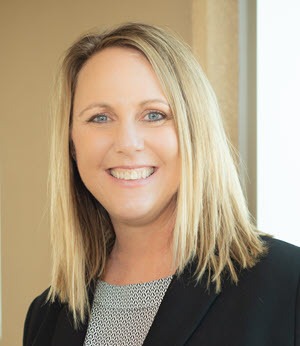
Andrea Childress headshot

Key concepts

  • You can improve social skills by practicing and intentionally getting out of your comfort zone
  • Initiating relationships with new people can be challenging as an introvert
  • A leadership training program may help you grow your social skills
  • Mentoring is great for your growth; either internally or externally
  • Even an analytical introvert may want to be around people more
  • An intentional meeting framework such as Five Dysfunctions of a Team can lead to more effective meetings

Quotable

If I want to really be a leader I need to step up and I need to reach out more. So I just started pushing myself and believe me it was baby steps at first

I can’t overestimate how valuable it is to have a network, to lean on that network, to provide support to that network

Instead of just sitting there taking notes or scanning my phone while I’m in between sessions or something, I’m trying to look around and meet people

Olympic athletes have a strength and conditioning coach,a skills and drills, coach, a nutritionist. Find mentors that help you be your best in many different areas

Resources or Products Mentioned in this Episode

Links

Transcript

Ben: Joining us today is Andrea Childress. Andrea is the Executive Director of Cybersecurity, Governance, Risk, and Compliance for the University of Nebraska. The GRC team provides resources and thought leadership around cybersecurity program management policy, risk assessment, compliance awareness, incident response, privacy and legal requirements. Andrea has a background in application development before moving into management and cybersecurity-focused roles. She has presented at the University of Nebraska Women Advance IT conference and the EDUCAUSE Security Professionals Conference. Andrea has a Bachelor’s degree in Business Administration Management Information Systems and an MBA from the University of Nebraska at Kearney. You can contact Andrea at achildress@nebraska.edu. I encourage our listeners to visit HopefortheIntrovert.com where you’ll find complete show notes including a transcript of today’s conversations.

Ben: Hi Andrea. How are you?

Andrea: Hi Ben. I’m good, thank you.

Ben: Welcome to the Hope for the Introvert podcast. Very much looking forward to our conversation today. Can you tell us about your role at the University of Nebraska and what your workplace is like?

Andrea: Sure. Well first of all, thanks for having me. It’s great to be here. My role at the University of Nebraska, it’s a little bit complicated, especially right now. I have the GRC executive director role on our cybersecurity and identity team, which actually provides services for all three campuses within the University of Nebraska. And those are in the cities of Kearney, Lincoln, and Omaha. But I’m also at the University of Nebraska at Kearney located physically because I’ve been here for 25 years. I started out as an application developer and worked my way up and now I’m the Deputy CIO in effect. So I’ve been here for a long time and that team of people is about 22 professionals. But two years ago the University of Nebraska, ITS shops combined from our three campuses. So now my ITS department has over 300 people. So there’s been a lot of change in the last two years there.

Ben: So it’s not really centralization because you didn’t move, it’s more of a centralized management?

Andrea: That’s correct. We have leaders on all three of our campuses now and I have people that report to me in both of the other two cities, and my bosses are in other cities as well. So it’s really, it’s really crazy. But we use IM a lot and we talk as much as we can. We use tools like Slack as well and lots and lots of email. But basically, yeah, we have five shared services or scaled services where those things like infrastructure and client services and security, we’re doing them all, or we’re working to provide all those services in the same way across the enterprise in order to scale for efficiencies and to save money.

Ben: Okay. So what’s your workplace like then with this very large extended organization but a small number of people on the Kearney campus?

Andrea: Yeah, it’s really interesting and like I said, it’s been a lot of change for us to get used to and be able to take advantage of that large number of resources. The best advantage for, for my campus here, which I’ll refer to as UN-K (if I say that later).

Andrea: It’s when you said extended that it reminded me of extended family, because we’re small here in Kearney and so we’re kind of like a family, and now that we have these extra people in these other cities. It is like our extended family that we get to work with everyday and lean on really, because we’re greater together. Obviously, because there’s so much more depth than we used to have.

Ben: Okay. So is your organization at Kearney, are you centralized or are you kind of distributed amongst the different colleges?

Andrea: There are three colleges on the Kearney campus, three academic colleges plus plus the graduate. And so some of those colleges have one or two distributed IT people. But those people even have a dotted line to our central IT organization. So we’re sort of a blend. But the Lincoln campus has a lot of distributed IT and Omaha has some as well. So it’s a mix like you find in most systems, I think.

Ben: Okay. And I don’t know how many of our listeners are familiar with information technology and higher education, but it has its own unique set of challenges. I think there’s an assumption on the outside (or maybe not), that everything is centralized and a central group handles all of the different colleges. And I know at least at RIT that that’s certainly not the case. And you have your tensions between more of a centralized IT organization that handles the network, and then you have colleges that have different needs. So they sometimes have their own IT organizations. So it can be–it’s, I would say bit of a zoo, but that may be–that may be accurate. Actually. We’ll go with zoo for now.

Ben: So you’ve identified as an introvert and actually as an Artisan, which is unusual, because most people that are–that come out with the temperament type of Artisans don’t have a lot of interest–at least what I’ve found–in terms of talking about temperament and things like that. So this is actually unusual. So I’m looking really looking forward to the conversation! Talk to me a little bit about what it’s like being an introvert at work or in life in general.

Andrea: Yeah, that’s a great question. So I think early on when I was an application developer, it was not unusual for me to sit in my office almost all day, every day. Periodically there would be meetings where I was meeting with my clients, basically learning the requirements of what they needed to be worked on. Right? But again, I’m on a kind of a small campus. There’s about 7,000 students here. So there’s only about 500 faculty and staff. And I worked in administrative computing in those days. And so it was this very small number of people that I needed to work with, which fit my personality great. Because as an introvert, you have a small number of very close friends, typically, as opposed to the extroverts that have more friends than or acquaintances And I don’t know how close they are to all of them.

Andrea: But I would spend a lot of time alone and I really liked the work there because–I’m also analytical. So when you got done writing a computer program, you could see that the results were correct. You knew when you were done, whether it was right, what you could validate it by, by running some other data’s extracts or something like that. But then as I grew and got a Master’s degree and an MBA, I got a little bored with that and I got tired of being alone all the time. And I learned that I really do want to work with people. And so I moved into management and I started leading the application development team. And then early in the early 2000s when security–cybersecurity became a thing, I started leading that area, which you know, that over-arches all the facets of it and you can’t–we’re not one person or one small team can do security. So you have to work with all of it. And so that’s been great because I do really like to collaborate, and I have learned that working with other people helps you come up with a better answer than you just by yourself. Did that answer your question?

Ben: Yeah, kind of. [laughing] You’ve talked about what it’s like being in your office and going from really a very much sole contributor role to now having moved into management and being around people a lot more. One of the other things that you hit on was how you knew at the end of the day whether something would work or not, because you could run an abstract or a report of some kind around that and tell whether or not it was working. So I’m assuming that it’s a little bit more complicated now. And I’m curious, what do you-how have you found this change to working with people? I realize it’s been a number of years now, but also what do you is your biggest challenges in the workplace as an introvert?

Andrea: Yeah. Well, I do think I’m more analytical at heart than–one of my college professors said, you’re either a touchy-feely manager or you’re a number cruncher, accountant type of person. And I’ve always kind of felt like I was both, but I do think I tend to be more of the number cruncher. And so what I think is challenging is sometimes I like to take extra time to process before I can respond, and that can actually be perceived as inaction, right? Like, why, why haven’t I heard from her? You know? And so I do have to learn to make decisions quicker than I am–more than I am comfortable with, so that I can get back to people in a timely manner as they’re expecting. Otherwise, they think they’ve asked a question and it’s gone into a black hole.

Andrea: But also another challenge for me is initiating relationships with new people. That making myself do that just for the sake of doing that. It’s not hard to meet people when there’s a reason that you’re on the phone or you’re in a meeting, but to just be more outgoing, to get to know people because when you collaborate, you’re giving and you’re also receiving. And so that to me is also very satisfying in a different way, much like writing code and getting the right answers and satisfying that.

Ben: So were there specific steps you took towards being say more social? I don’t want to say that because that sounds like it’s a handicap of some kind–but being more comfortable with initiating conversations with people and things like that?

Andrea: Yeah. mostly it’s just practice and making myself step out of my comfort zone. What got me to the point where I realized I needed to do that was going through a leadership training program. And they were spending a lot of time in this one session about how your network is really important and you would need to be intentional about building your network. And I kind of thought to myself, “Wow, I’ve never built a network.” I’ve just worked with people that happened to cross my path that I needed to work with. And so that just got me thinking, “Wow, you know, if I want to really be a leader I need to step up and I need to reach out more. So I just started pushing myself and believe me it was baby steps at first. Right? You know? [laughing] But now it’s much more common and it’s easier for me to do it.

[bctt tweet=”If I want to really be a leader I need to step up and I need to reach out more. So I just started pushing myself and believe me it was baby steps at first.–Andrea” username=”hopeintrovert”]

Andrea: And what I’ve learned when I’m approaching someone or introducing myself to someone that I don’t know is that generally people are nice and people like to talk about themselves. So if you just ask a question or two, you’re typically gonna get, a conversation. You might learn something and you might be able to share something with them. And it’s usually beneficial. And it’s usually worth it in the end. Even if you don’t have anything to work together or that can benefit either of you at the beginning, if you remember that person’s name you can contact them later and they might be able to help you or you might be able to help them in the future. So that’s really great and really it’s just practice. I just make myself do it when I go somewhere. Instead of just sitting there taking notes or scanning my phone while I’m in between sessions or something, I’m trying to look around and meet people or I talk to someone and ask them a question or something like that.

[bctt tweet=”Instead of just sitting there taking notes or scanning my phone while I’m in between sessions or something, I’m trying to look around and meet people. Andrea” username=”hopeintrovert”]

Ben: So you’ve made it very intentional and really kind of pushing back against what your natural would probably–I know for me, I’m going to check my phone because I don’t really want to talk to anyone right now and they won’t bother me if they know I’m on my phone. And of course then you look across the room and 90% of the people are doing the same thing. So it’s always kind of interesting. You had mentioned in your pre-podcast questionnaire that you had taken part in a workshop or something or had an assignment in an EDUCAUSE workshop where you were required to talk to someone else?

Andrea: Yeah. Yeah. This is a fun story, and this was early on when I was being more intentional about doing this, but I was in a, I think it was a four hour workshop. No, it must’ve been an eight hour workshop because it was right before lunch. And the person who was leading the workshop, she said, “Okay. It’s time for lunch, but I want you to take five minutes.” So we were sitting in round tables, there was probably eight people per table “and turn to someone at your table and ask them their name, ask them where they live and then ask them what a fun fact about themselves is. And so, you know, this was an IT security workshop. And so most people just looked straight down or typed on their computers or got their phones out, or maybe they left the room, They just went to the bathroom or went to lunch early and didn’t, do the exercise. And I was like, “Okay, this is a opportunity to be intentional about this.” That’s in my lap, right? It’s been given to me and how much easier could it possibly be? So I turned to the guy sitting next to me and introduced myself and asked him his name. And it was funny because we had this long conversation, and he was telling me about his daughter who was a competitive handgun–yeah. Competitive shooting with a handgun person [laughing] award-winning I guess. And so it was just really fun. Well then we came back from lunch, and we were getting ready to start the second half of the day. And the workshop presenters said, “Okay, who wants to share something that they learned about their neighbor?” And, you know, instantly all eyes straight down at the table.

Andrea: And so I’m like, “Here I go.” So I stood up and I said, “This person is Kyle. He’s from San Diego and his daughter is an award-winning handgun competitor.” And that’s all I had to do. And then I sat down and one other person out of the whole room of at least 50 people stood up and kind of shared a little something about their neighbor, and no one else would even give eye contact to the person [laughing]. I felt very proud of myself, but also that this was like no big deal. But for me it was a big deal and it was kind of a turning point or a good example of how I was trying to work on that kind of thing. And now it’s much more a natural thing. So I would just say,

Ben: I wonder what the response the facilitator really expected. If they had been around IT people before and to see if anybody–it says something that there are only two people willing to share out of the group there. So that, it is funny. So what do you consider to be your strengths? What are the things that you really bring as an introvert and how do those work out for you? How do you leverage those?

Andrea: That’s a good question. Yeah. I think when I was talking before about how introverts have a small number of really close friends, the way I see that translating into my professional life is my ability to build relationships with people. I’m very I’m empathetic and I believe that I build really good relationships with those people that I work with, and I trust them and they trust me. And so I think that has worked out really well. And then also I think my analytical ability, which I am not 100% sure if that is an introvert characteristic. But I work in risk management now. So,they kind of go hand in hand, and I have this analytical thought process, so I think it’s great for the security realm. Because security works collaboratively across the IT organization, I get to feel that collaboration a lot or I get to use that collaboration skill, but really those one-on-one relationships can– you can’t even measure the value. It’s just fantastic being able to build a good relationship. And I’ve had a lot of feedback from people in that regard, “You, you act like you really care about me” and I’m like, “I do.” I don’t know why people would be surprised by that.

[bctt tweet=”You can’t even measure the value one-on-one relationships . It’s just fantastic being able to build a good relationship. Andrea” username=”hopeintrovert”]

Ben: It’s really interesting to have empathy as one of your strengths, I think. And I don’t–I think that’s definitely the case for some introverts. I know my temperament type. I’m an INTJ, and I’m not supposed to have empathy for anything or anyone whatsoever. And it doesn’t really work out that way, but it’s kind of the, “Oh,. you’re the logical person. Emotions don’t sway you, and blah blah blah.” But none of us, we don’t fit those categories all that well anyway. So in what ways have you found that you’re an influencer or leader in the workplace? And in our next segment we’ll talk about women in leadership and your passion about that and what you’re accomplishing there. But in general, what ways have you been an influencer or leader?

Andrea: Wow. There’s probably a number of them, but currently in the last two years since our IT organization is combined across the University of Nebraska, there’s a security managers team that’s been working together–the service managers and the people that actually manage teams. And so this sort of new group is thrown together and we’re not really given a direction. We know we have to work together. We don’t really know how. And so a few meetings into it, I was kind of thinking to myself, “Well, I don’t really get what we’re working towards on this team. It’s like we get together and we share information, but we don’t have a real purpose or you know, it’s not great, these meetings.” Right? So I started trying to get this team to think about what we needed to be learning from each other and telling each other on a weekly or biweekly basis.

Andrea: We changed our scheduling up quite a bit. And then I read this book called the Five Dysfunctions of a Team about making high performing teams. And so I started getting that group to do some of the things in that book and I shared with them all the takeaways. The author of that book is Patrick Lencioni and then he has his second book called Death by Meetings. Which is fantastic. And so we changed our meeting structure to follow that–the way that book describes part of his, his strategy in the book. And it’s been fantastic. It’s kind of night and day how we started to work better together and early on the five dysfunctions of a team work that we did. It’s a lot of sharing feedback with each other, getting to know each other, mentoring each other. And so that’s the kind of thing you have to do. You have to get to know people before you’re comfortable pushing back on their–what they’re saying or questioning or asking them a hard question to make sure that we’re moving in the right direction. But that’s really important. In security. I mean there’s so much work to do and you can’t possibly do it all. So making sure we’re doing it the right way and the best way.

Ben: Yeah, I agree with you on that. And I think in the security realm, none of us know everything and to even pretend that we do, or to try to hold on information and not share it is one of the ways you end up with real problems. Because, “Well, if I had known that was an issue, we could have worked together to solve it,” as opposed to, “Oh, now we’ve had this incident.” And it was because we didn’t talk enough initially to start it. I’ve also been on those dysfunctional teams where getting to know each other and casual conversation was really discouraged, [Andrea laughing] and they were not–they were not enjoyable and maybe they were somewhat effective, but I think that had more to do with the fact that people were, “We’re talking to each other anyway,” and wanted very much to work together to make things work regardless of how the team was functioning or how the team was managed. So I think it’s a really important thing. Like I said, it’s much broader than just IT and the whole idea of high performing teams. I love the Death by Meetings !I have not read the book, but we’ve all experienced it and probably experienceit still very, very often. What recommendations do you have for introverts who want to become influencers or leaders?

Andrea: Okay. Well I guess I would go back to the networking thing. I can’t overestimate how valuable it is to have a network, to lean on that network, to provide support to that network. When you have a problem at work and you realize, “Hey, I have to go work with Ben, but I’ve never met Ben before.” If you have already built a relationship, it’s so much easier to deal with whatever that problem is. And that is the case at any level, whether you’re just starting out or if you’re a CIO. Right? So try to get over that networking fear if you have it like I had it as well. And just remember people are nice. They like to talk about themselves. They like to talk about themselves. It’s the easiest way to get it started [laughing]

[bctt tweet=”I can’t overestimate how valuable it is to have a network, to lean on that network, to provide support to that network. Andrea” username=”hopeintrovert”]

Ben: Networking has come up as a theme several times in the podcast interviews. And I think a lot of the issue stems from people’s perception of what networking really means. And rather than the, “Oh. The’re 25 people in this room, I have to meet all 25 people and I have to have speed dating,” essentially you’re speed networking. And just spend that five minutes with each one of them and move on to the next person, compared to, they’re 25 people in the room and there are a couple that you might actually spend extensive conversation time with. And then you do get to know each other a little bit. It certainly makes it much easier when you have an opportunity to work together. You now know that person is a good resource for that because you had that in-depth conversation, rather than, “Oh, they work at such and such, and blah, blah, blah, and next?” Which just doesn’t work for me at all. I think many introverts in general have a–I don’t know if it’s a fear of small talk, but the idea of it is in some cases paralyzing and definitely something that we feel like we want to avoid.

Andrea: Right. And I mean, I’ve heard lots of techniques for small talk. If you’re going to an event, check the latest headlines or the latest industry trade news about whatever the conferences you’re attending or something like that. But yeah, just having one or two things in your pocket that you can lean on if you do draw a blank is helpful. And then again, just ask people about themselves.

Andrea: I was going to say one other thing about in what ways have I been an influencer, a leader. And again, going back to I think my strength in empathy and interpersonal relationships, is using a mentoring program, either volunteering to be a mentor or are asking to have a mentor in more than one. You don’t just need one at a time, right? If you’re an Olympic athlete, think of it like this. If you’re an Olympic athlete, you’ve got your strength and conditioning coach, you’ve got your–I don’t know–skills and drills, coach, you have your nutritionist. I mean, you have all these people that are helping you be your best and you need to think about yourself in that way as well in terms of your career. So figuring out what you need help in or where you want to grow and try to find or seek out a mentor if it’s possible. Because that has been really fantastic for me. And, and their only goal if you have a mentor, is to help you figure out how to get to your next level. And so, it’s always mentoring that’s important. Right?

[bctt tweet=”Olympic athletes have a strength and conditioning coach,a skills and drills, coach, a nutritionist. Find mentors that help you be your best in many different areas. Andrea” username=”hopeintrovert”]

Ben: Do you recommend them as an internal mentor or an external mentor? Or maybe it’s some of each. I’m not sure.

Andrea:Yeah, I would say all of the above. I mean, I’ve had them internally across the enterprise here at the University of Nebraska. I’ve I had them through the EDUCAUSE Security Professionals Conference. I know I’ve had more, but yeah, just I would take anybody who wanted to be my mentor, because I’ve gained so much knowledge from each relationship that I’ve had. [laughing]

Ben: Great! So, are you mentoring also?

Andrea: Yes. we just started a mentoring program here just within our internal ITS department ,and we just piloted it in the last couple of months and it’s going to be more of full-blown this fall. And I was a mentor in that program. And that’s invaluable just to get to know people on another campus. Right. I mean if you’re not physically in the same city, just spending that time to get to know people is really great.

Ben: Yeah, I’ve found I’ve been more, I think on the mentoring side than being mentored side, but that’s probably my own fault as much as anything. But I’ve found the mentoring relationships to be really–well, they’re very rich and they transform both the mentee and the mentor, and especially, one just getting to know each other better. But as you work with people on specific types of areas that they want to polish up or make stronger, whether it’s an interpersonal or how to handle conflict at work–our favorite thing for all of us–you gain a lot of information from them as well. And a lot of–I think a lot of strategies.

Andrea: True. Right. And when we did our reorganization, I mean there’s a lot of people that are managers now that weren’t before. So we just had a big need for that. And so those of us that had been doing it for a few years were asked to help.

Ben:
Thank you Andrea for being on Hope for the Introvert today. I’m looking forward to our continued conversation as we delve into women in leadership and the challenges that women face there.


Extras

Women in Security (Not Insecurity) panel at EDUCAUSE Security Professionals Conference 2019
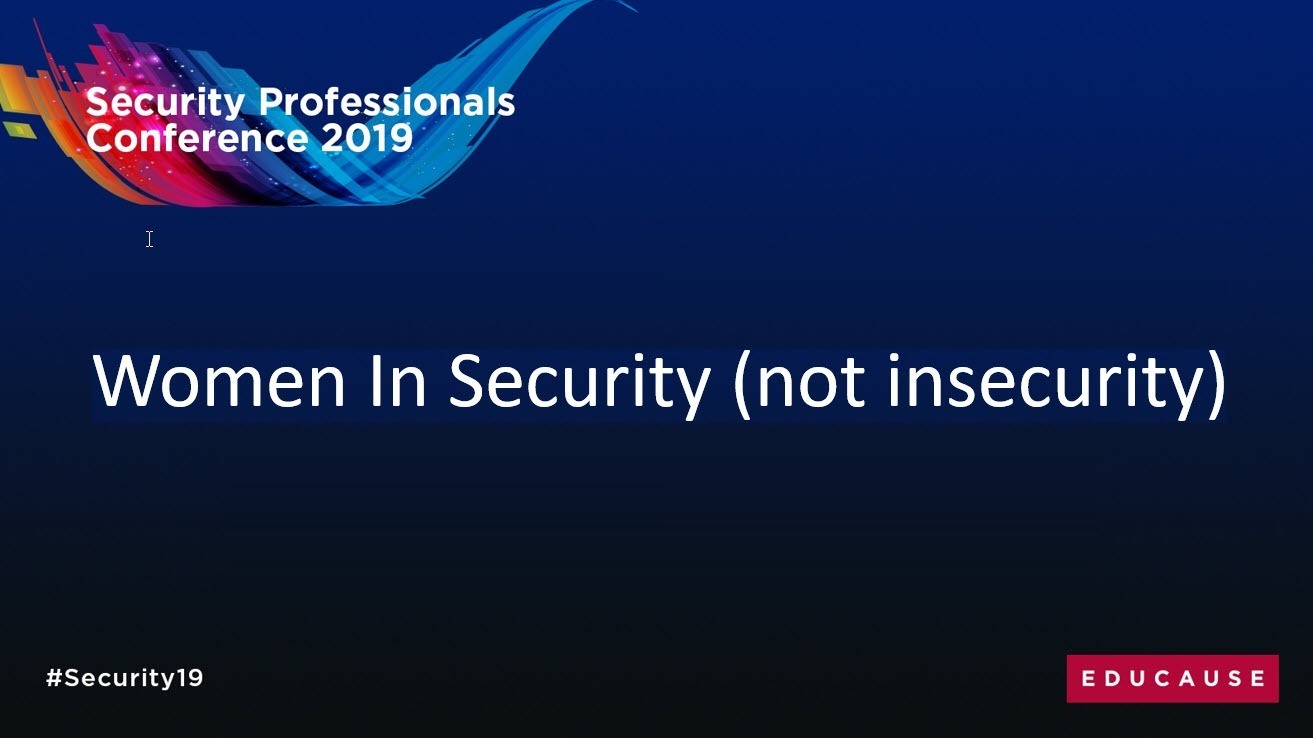
Cover Slide for Women in Security (not insecurity) panel at EDUCAUSE Security Professionals Conference 2019



  • 0
Megan Mack Headshot

Episode 28: Megan Mack–Introverts and Improvisation

Category:introversion,Introverted Leadership,introverts,Leadership,Podcast

Episode 028 Show Notes: Megan Mack

Introduction

Megan Mack and Ben Woelk discuss the importance of improvisation exercises for introverts and building communication skills.

Megan Mack Improvisation facilitator

Key concepts

  • Improvisation skills help introverts
  • Improv is about listening and reacting
  • Introverts can be amazing improv facilitators
  • Ben’s Introverts and Leadership class includes an improvisation workshop
  • Mirroring helps communicate with people in a way that’s more effective
  • Improv helps you be more accepting of others’ ideas
  • Work hard, try to be as confident as you can, and trust your instincts.

Quotable

The beautiful thing about improv, especially for introverts, is that it’s all about listening and reacting.

Introverts are such good listeners and they’re good followers. They build upon ideas. I think a lot of the time they have empathy; they have emotional intelligence.

Mirroring helps communicate with people in a way that’s more effective both for them and for myself.

Improv really forces you to think, Yes, I like your idea and here’s how we can try to make it work.

We get stuck in our heads, we stop listening and we think our ideas can be the only ideas or the best ones or the right ones.

‘Yes, and’ has been very important for me to understand, especially in leadership positions and you want to have a persona that is supportive of people and not setting an atmosphere where they’re afraid to advance their ideas.


Resources or Products Mentioned in this Episode

Links

Transcript

Ben: Joining us today is Megan Mack. Megan Mack is an improviser, sketch comedy writer, and television and radio producer based in Rochester. She is a graduate of the Conservatory and Writing programs at The Second City Training Centre in Toronto, and has studied with Jimmy Carrane, Armando Diaz, Susan Messing, and T.J. Jagodowski and David Pasquesi. Megan performs with the sketch comedy and improvisation troupe, “Thank You Kiss,” and coaches improv and sketch comedy at the Rochester Brainery, Writers & Books, the Focus Theatre, and more. When she’s not on stage, Megan produces “Connections with Evan Dawson,” the daily afternoon radio talk show at Rochester’s NPR station, WXXI. She has also produced television segments for WHEC-TV, NBC Olympics, NBC Entertainment, and Seeten TV in Florence, Italy. I first met Megan at one of her improvisation classes at the Rochester Brainery. Since then, she’s conducted improvisation workshops for me for the STC Rochester Spectrum Conference and my Introverts and Leadership class at RIT. You can contact Megan at mac.megan01@gmail.com.

Ben: Welcome back, Megan. I’m glad you’re joining us again on the program. Today we’re going to talk about improvisation and communication and introverts doing improv, which almost sounds counter-intuitive in some ways. We had started the last time we spoke about how you had gotten started in improv and my first contact with you was attending one of your improv workshops at the Rochester Brainery. And one thing I probably have not told you about that is I refused to let my wife come with me because it was my first time doing improv, and I was afraid I was going to be an absolute idiot and I’ll do it the first time and I’ll just get through it. But I’ve thoroughly enjoyed it also and I’ve always enjoyed watching it and being part of the audience, but it in some ways it’s such a freeing type of activity, I guess once you get past your own head with it. Let’s talk a little bit more about what it’s like to be an introvert, yet you teach improv.

Megan: It’s as you mentioned in our previous segment, it can be hard for you to be up in front of a class sometimes and it’s very hard. The most difficult part of improv classes for me is starting the class, talking a little bit about myself and just talking about the basics of improv. Not that I’m uncomfortable talking about improv, but I don’t want to be me. Once we get into character work, I’m fine and I have a great time, but it can be intimidating, especially as an introvert to be up in front of a group of people and be leading the class .

Ben: Well and they’re all looking to you.

Megan: Right! Everybody’s looking at you.

Ben: Completely, especially at the beginning because–and one thing that you’ve done, is you just helped me with my Introverts and Leadership class I’m doing at RIT, and we’re going to get to do that again in the fall, which will be great fun. But some of the students shared that in all honesty, they almost didn’t sign up for the class because there was an improvisation workshop part of it, and at least one or two of them were really uncomfortable with being there. And eventually they relaxed. But you could certainly tell up front.

Megan: I hear that a lot, especially when I work with companies that ask me to come in and do team building exercises. But the beautiful thing about improv, especially for introverts, is that it’s all about listening and reacting. So the basic rule of improv is, you know, is say “Yes, and.” You want to agree to someone else’s ideas and build on them. But you can’t do that unless you’re actively listening. So I’m going to work off whatever you give me, and I know that you’re giving me something. We call it a gift or an offer in improv. You don’t have to put any pressure on yourself to come up with something because your team is there to support you, to have your back. So I was terrified in my first ever improv class. But once I realized we’re all here together, we’re all going to help each other and we all need to listen to each other and it got so much easier.

[bctt tweet=”The beautiful thing about improv, especially for introverts, is that it’s all about listening and reacting. @mmackmedia” username=”hopeintrovert”]

Megan: And I’m sure there are exercises that are more difficult than others. I can think of some that I still am not a huge fan of to this day and I’ve been doing this for more than a decade. But you can find the confidence within yourself because you know you’ve got a team around you and because introverts are such good listeners and they’re good followers. They build upon ideas. I think a lot of the time they have empathy; they have emotional intelligence. It can be a natural thing to be in an improv scene. It’s not about performing. It’s about reacting.

[bctt tweet=”Introverts are such good listeners and they’re good followers. They build upon ideas. I think a lot of the time they have empathy; they have emotional intelligence. @mmackmedia” username=”hopeintrovert”]

Ben: And I think that’s a really good point. And when we’ve, well one thing that we did, we kind of put together a syllabus for the class and with the exercises that we were going to be using, and there was no way I was going to share it with the class ahead of time because they would try to prepare for it. And the question came up, even with a team building that you’re going to be doing with us of, “Well, what exercises? What are we going to do?” I’m not going to tell you what we’re going to do because you’ll try to practice and be ready for it and it just does not work that way,

Megan: Right? It goes back to getting in your head. So if you’re trying to come up with scene ideas, or character ideas, or something to say when you’re standing on the back line watching a scene, you’re not actively listening. It’s better to go out there. I always tell students, go out there when you’re the most scared, when you have the most anxiety because you’re thinking the least. You’re so nervous that you’ll go out there and you’ll take whatever you’re given and you’ll build on it. It’s better than thinking, well, I haven’t been out there yet and I haven’t been really funny, but I have this old lady character that I know is going to work, so I’m going to go out there and play this old lady. This scene could be about a couple on a honeymoon. On a beach was this woman there. Now it makes no sense. I mean you could make it work, I’m sure, but the point is you’re not actively listening.

Ben: No, it’s not. It’s not a natural thing to make that work necessarily either. [Megan, “Right”] Yeah, it was really entertaining. The first session that I did with you, and I think I’ve done a couple with you there and we’ve done the other ones and I’ve even stepped into co-facilitating some improv at a conference, which was an interesting experience, too, because the guy I was partnered with was a hundred percent extrovert. I mean as extroverted as you could possibly be, and then I’m not, and just the mix in terms of how we worked with people, it was just–it was kind of crazy.

Megan: How did that go?

Ben: I think overall it worked. I had a lot of people who signed up for it because they trusted me and I felt very validated by it, but also felt like, “Oh, I need to make sure that my very extroverted friend doesn’t go totally over the top with things which he could do.” But overall it was a fun experience. It was tiring. It was two, two-hour sessions in two days as part of the conference activities along with everything else that was going on with it of course. And I really enjoyed it.

Ben: And part of what really got me excited about improv was Alan Alda’s book, If I Understood You, Would I Have This Look on My Face?: My Adventures in the Art and Science of Relating and Communicating, where he has spent this time with Stonybrook-Long Island and set up this Institute for helping science and medical professionals communicate, and just talking about how valuable that improv work is for them because they learn to be active listeners and they learn to empathize. And I kind of took that and looked at it and said, well how will that work for introverts? Because I feel like–well RIT, honestly, yes, we have that same type of personality types as scientists or medical professionals anyway, but in general, how would these same techniques work for improv?

Ben: And it was really exciting this last spring when we did our morning, yes, Saturday morning early improv session, which was a challenge for everyone there. But it was really exciting because you saw–I mean there were some struggles, definitely some struggles at times typically when they weren’t being physical enough in a scene. But in general, the follow-up survey I did, it’s like everyone nailed it. They all really loved you, but they all understood what they were getting out of it in terms of communication skills and that part was really, really rewarding. Honestly, it was a five week class. It was an online class. I had them read books, I had them write reflection papers, we did an improv workshop. I didn’t feel like I was working at all, because it was so much fun and I’m looking forward to being able to offer that again this fall as well.

Megan: I read the book that you mentioned after you told me about it. I zipped through it in two days. I learned so much from that book and one of the greatest things I learned was about mirroring. I’ve done the mirroring exercises before in my classes, but I thought I need to apply this more to my professional life and I have and it has just been so eye-opening for me, whether it’s noticing body language or vocal choices or just how someone is feeling. It’s really, really been beneficial.

Ben: Yeah, and found–I’ve been in another workshop and they did the mirroring and they did it for like 60 seconds and that was so hard, because you realize I really should not have had quite as intense an emotion I was trying to portray. To do that for 60 seconds–How much can you yell and shout? And it’s like, Oh my gosh, we still have 40 seconds left. But it was, it was interesting. So what did you find most helpful with the mirroring?

Megan: I think I’m pretty in tune with body language and how people are feeling a lot of the time. But there was a section of the book where they were talking about mirroring in a negative sense, and I think it was for salespeople. I’m not sure if you remember this and I can’t, I can’t quite remember what it was about. Fill me in if you do. But it felt kind of sneaky and dirty and wrong and just kind of trickster-type stuff, and I thought about it in terms of journalism and you know, you don’t want to bait and switch people, which–and we don’t do, but sometimes we get pitches from PR people that are not quite there and they try to sell you a bill of goods. And I think I’ve been able to communicate with people in a way that’s more effective both for them and for myself when it comes to knowing we have a shared goal to have someone on the show, but we want very different things out of it.

[bctt tweet=”Mirroring helps communicate with people in a way that’s more effective both for them and for myself. @mmackmedia” username=”hopeintrovert”]

Megan: So to try to help see that side a little better. I’m not implying that PR people are tricksters, but you know, I’m working from my own frame of reference, which they don’t have and they’re working from their own. So I think it’s helped me open my mind a little bit. But the way that this–I think it was a company that Alan Alda was talking about that was employing these techniques for negative purposes, like try to trick people by mirroring their body language or adopting their emotion so they can feel like they’re being listened to, they’re being heard, or they can relate to you better. And then try to sneak your way in, because I don’t like that at all. But the positive thing I took away from that was try to understand where someone’s coming from and meet them halfway.

Ben: Yeah. No, I would agree. And I do remember that part that you were talking about and it’s interesting because I do some workshops on temperament and what that means in terms of how you interact with people in the workplace. But as part of that, you also learn triggers, which can be very negative for people. And it’s almost like you have to have this, please promise, you’re just going to use this for good because you know now what this certain temperament type, what’s really going to impact them in a negative way. So giving you this information, but we’re trusting you to not be cruel with it in a sense. And there’s a Cialdini book called Influence: The Psychology of Persuasuion, which gets into a lot of this too. And it’s really kind of frightening because it really does talk about how we can be influenced towards certain things and just not have any sense at all.

Ben: And like so when you get into the mirroring and that could be used for that because, “Oh, I’ve had the connection with you now and now I’m listening and buy the brushes or whatever.”

Megan: You’re explaining it much better than I did, but yeah! [Laughing].

Ben: So what else do you find in terms of improv and how that’s, I mean have you thought about it more in the introvert context and around communication? Because you’ve been teaching these classes for a while and I kind of brought this, “Well what if we look at it like this and how that applies?” What do you find now? Are you more aware of how it works towards communication skills?

Megan: Yes, I think I am. I think I’ve learned that as a whole, people have a tendency to go to the know or to ask a question, and maybe you’re working on a project with your colleague, and they have an idea and you’re like, “Well that won’t work because X,” and improv really forces you to think, “Yes, I like your idea and here’s how we can try to make it work.” That’s been really the most beneficial thing for me.

[bctt tweet=”Improv really forces you to think, Yes, I like your idea and here’s how we can try to make it work. @mmackmedia” username=”hopeintrovert”]

Ben: Yeah. I’m very good at, “Oh, I know why that won’t work .” and learning…

Megan:  You’re a problem solver, right?

Ben: Yeah. And it’s like, well, I wouldn’t even consider that, but then it’s like, no, I need to step back and that “Yes, and” part’s really important. Well, one for creating that open environment where people trust you and it’s safe for them to express ideas, but also because well I might actually be wrong and I need to hear these ideas out and wow, that was a great idea.

Megan: Absolutely. I’ve noticed how wrong I am in so many ways, [Both Laughing] thanks to improv, but we get in our own heads. We get stuck in our heads, we stop listening and we think our ideas can be the only ideas or the best ones or the right ones. And when you’re in a scene with someone and you have no idea what’s coming your way, you have to trust your scene partner and know that they’re trying to make you look good. That’s one of the biggest lessons I learned at Second City. Make your partner look good. It’s not about you. So if I go into a scene with you, Ben, and my goal is to help you shine and you have the same goal for me, then we’re going to do a great scene because we’re not being judgmental, we’re not being narcissistic, we’re there to support each other.

[bctt tweet=”We get stuck in our heads, we stop listening and we think our ideas can be the only ideas or the best ones or the right ones. @mmackmedia” username=”hopeintrovert”]

Megan: So I think you can translate a lot of that into a workplace or in social settings. You know, maybe you’re at a coffee shop with your friends, and you notice as an introvert probably would that one person’s not saying too much, or maybe they don’t feel included and you’ll try to create a situation in which you can draw them in, or you know, the next time they say something you “Yes, and’ it in your own non-technical improv way, but you bring them into the conversation. And I think that’s been really helpful for me.

Ben: I think that’s really cool. What suggestions would you have for people who might–for introverts who might want to become leaders or influencers? And I don’t want to cut off the improv conversation if we have more to talk about there, but I’m not sure what the next question would be. So any thoughts?

Megan: I’m kind of curious about your experience with improv and how it’s helped you, because you came to a Brainery class as you said by yourself, didn’t bring Marilyn and you came back and you brought her and now you’re teaching it on your own. So there’s something that must have been really triggering in a positive way for you. Some kind of light bulb moment where you thought, this is really helping me. This is really something that I can latch onto.

Ben: You know, it’s a really interesting question because I don’t know that I’ve stepped back from it enough to really think about why it is I think it’s important. Obviously I do, because I’ve included it in this Introverts and Leadership class and understand the techniques I think to some degree, but it’s why am I gravitating towards it besides watching Whose Line is it Anyway for however many years and that sort of thing and just thoroughly enjoying it. I think I’ve always–even though my temperament type, I think I’m supposed to be more of a planner, but I’m also able to change plans on the fly, and I think the improv is kind of like that also because you don’t know what’s coming next. But I think for me it’s a really tough question. I just don’t feel like I’ve thought it through completely, but I think the “Yes, and” part has been very important for me to understand, especially in leadership positions and you want to have a persona that is supportive of people and not setting an atmosphere where they’re afraid to advance their ideas.

[bctt tweet=”‘Yes, and’ has been very important for me to understand, especially in leadership positions and you want to have a persona that is supportive of people and not setting an atmosphere where they’re afraid to advance their ideas. @benwoelk” username=”hopeintrovert”]

Ben: And that part’s very important to me. There was another book by Daniel Coyle called The Culture Code: The Secrets of Highly Successful Groups and it was about high performing organizations and the cultures they built, and I’ve been part of governance bodies or boards in various organizations where that atmosphere was not there. They kind of hit all of the five dysfunctions of a board or however many of it is very well, and there was a lot of attempt to control around things, and I think I’ve become very sensitized towards that now and understanding that, especially in leadership positions, that I need to make sure that I’m giving everyone an opportunity to speak, to contribute, to feel–to belong really, I think is a large part of it. Now exactly how that translates back to going to improv. I found it–I just thoroughly enjoyed it. I enjoy the scenes. I enjoy some of the Goon River, you know, some of the other ones that we’ve talked about where you’re talking about this is the day you died.

Megan: You create a character and all of these characters live in the same town together and they all have happened to have died on the same day and all their deaths are interrelated.

Ben: And those were just so funny. In the session I did the one–second Brainery session I did with you where, I don’t remember what the name of the town was, but where the person next to me actually played–decided I’ll be the horse. It was really eye opening to me. It’s kind of like, “Oh wow, we don’t have to be people characters.” And so I remember when we did the one with the class, I was a flying squirrel.

Megan: I remember that. {laughing].

Ben: Named Rocky, of course, had to be. A flying squirrel, but just how much fun it was thinking about how that interwove with the other stories. You know, is was a kind of dark story, if I remember right, the way that one went.

Megan: I think so [laughing].

Ben: But in general, it’s just a lot of fun. I think I’ve, I like a sense, yes you are making it up as you go along, but you are working with people and you absolutely don’t know where things are going to go. And there’s a lot of freedom to that, because you’re not trying to reach a certain goal. And I think that actually is a big difference for me, because I have so many things that I participate in that are very goal oriented and to be able to just play and have fun and get outside my head in the sense of not thinking about what I’m going to look like once I got past the first time of doing it. And it’s like, “Oh this is no big deal.” But just the freedom of participating in something like that and seeing what kind of story you can build. So I think that’s what was the real hook for me. I’ve always loved it when the, some of the staging around the Whose Line and they would do the newsroom and all of that sort of thing and just how ridiculous it would get.

[bctt tweet=”Improv–the freedom of participating in something like that and seeing what kind of story you can build. @benwoelk” username=”hopeintrovert”]

Ben: I think that’s why I’m really enjoying it and for the class that I’m teaching, working with introverts and helping them understand what that means and that they have strengths, and some of that is introducing them to Cain’s Quiet book and things like that. It’s the first time they’ve read through the things and it’s like you see the light bulbs go on and more importantly than that, you see people who have felt hindered or have felt like they are in some sense of a strong word, “defective” in some sense or just not measuring up to everyone else. And being able to talk with them about what it means to be an introvert and to lead and how to be authentic, which is the other big piece of it. That has been tremendously rewarding and I think the improv work has helped a lot with that also.

Megan: I hear from a lot of first time students, I ask the question, what brought you here? What do you hope to learn? A lot of them say, “I don’t know why I’m here and I’m really scared.” And I say, “Thank you for being here. I hope you have fun. Just focus on having fun. “And at the end of the class I always check back in with people and they’ll say things like, “I didn’t know I could do that.” It’s in you, but because you’re so worried about how you’re perceived or what people could be judging about you, you get in your head. And I think one of the greatest rewards of improv, and this relates back to your class, when I helped with your students. At the end of that three hours or whatever it was, they could say, “I got up in front of people I didn’t know. I was in scenes that I had no idea was coming my way and I succeeded.” So if you can do that, you can get up and give a presentation of information that you’re already comfortable with. If you can do a scene where you’re a flying squirrel and people love it, you can give your next presentation about whatever it is you specialize in.

[bctt tweet=”Improv–I got up in front of people I didn’t know. I was in scenes that I had no idea was coming my way and I succeeded. @mmackmedia” username=”hopeintrovert”]

Ben: Well then I couldn’t figure out how to make the mime thing work, which was the other thing I had thought about. It’s like, “Nah, it’s too hard. We’ll do the flying squirrel.” Maybe one day of the mime. But it’s a very hard role to do for something.

Megan: Yeah. You have to rely on your body language.

Megan: And so yeah, overthinking what the possibilities are with that. So if we were looking at an introvert who wants to be a leader, wants to be an influencer, we’ve talked a lot about the improvisation techniques and I think given what we’ve talked about, there’s tremendous amount of value. I can’t imagine not recommending someone do improv no matter how terrified they are. But what would you see as the top things that an introvert should do who wants to become a leader or influencer?

Megan: I’d say the top thing is just be confident with who you are. And this is something that I’ve struggled with and I’ve come to realize is that you may be in a role that is perceived in a certain way. You are supposed to be this. If you are this, you’re supposed to be very outspoken. If you’re someone that’s on the radio or like that. I’m not, I know a few of my colleagues are not, but they’re good at what they do because they are who they are. So take those innate abilities, be confident in the unique skills that you have, and just “Yes, and” those to use an improv phrase. Just be confident with yourself and try to build your leadership abilities based on that. Because what’s the point of trying to be something you’re not? Then you feel more uncomfortable. You feel–you have impostor syndrome, you get in your head, you freeze up, you clam up and it serves the exact opposite purpose of what you want. So as I mentioned before, when I’m filling in for the host of the show, my job is not to be him. My job is to be me and do the best job I can. So it’s a learning curve. But being open minded, being competent and trusting yourself, those would be my top three.

[bctt tweet=”Just be confident with yourself and try to build your leadership abilities based on that. Because what’s the point of trying to be something you’re not? Then you feel more uncomfortable. @mmackmedia” username=”hopeintrovert”]

[bctt tweet=”Introverts as leaders–being open minded, being competent and trusting yourself, those would be my top three. @mmackmedia” username=”hopeintrovert”]

Ben: And being authentic is a big chunk of it.

Megan: Absolutely. And you mentioned that with scenes to an improv. If you play a character and you’ve never played a flying squirrel before, I’m sure, but you played it very authentically and I believed it and it was great.

Ben: What people don’t know! So in terms of that, and I actually think I pulled this off of your questionnaire, but I’m not sure, what is one thing about you that people would be surprised to know?

Megan: Hmm. I think for people that are not my very close friends might be surprised to know that I struggle a lot with insecurity and that stops me in my tracks multiple times a day. I think that would be, that would be it. Not–not it and there’s nothing else, but that would be the thing, because I’m sure after we finish talking, I’m going to overanalyze everything I said for a couple of hours and it’ll drive me crazy. And I wish that I didn’t have that part of me. But it’s there and it’s something that you try to work through.

Megan: And improv has helped me a lot when I’m really struggling, I turn on my improv brain and the judgy parts of myself go away. So I wish I could draw on that a little more.

Ben: You know, I appreciate you sharing that because I definitely have the insecurities too, and a lot of it has to do with who I’m dealing with and how I feel about that. And I am just as capable of feeling stupid and clumsy and everything else. And I think that is something–things like the improv, just getting out of your head and just doing what you need to do, or trying things and not being afraid to try things, I think is a lot of it and not worrying about failing in that sense. No, I can’t say I’ve mastered that lately either. So Megan, this has been wonderful. I’m glad we’ve had the opportunity to chat and you said overthinking things. I am going to be editing, so I’ll be…

Megan: I have a list of things I want you to remove, so we’ll chat. [Both Laughing]

Ben: Oh, I’ll bet. I’ll bet so. No, this has been a great conversation and I really appreciate you taking the time and very much looking to you on the next improv workshop that we do. Thank you.

Megan: Thank you for having me. I appreciate it.


Extras


  • 1
Ben Woelk Headshot

Episode 026: Ben Woelk–Follow the Yellow Brick Road

Category:Introverted Leadership,Leadership,Podcast

Episode 026 Show Notes: Ben Woelk

Introduction

Ben Woelk shares his article, “Follow the Yellow Brick Road: A Leadership Journey to the Emerald City.” Ben discusses the leadership lessons from the journey for the Scarecrow, a Rational leader, the Tin Woodman, an Idealist leader, and the Lion, an Artisan leader.

Cover art from Frank Baum's The Wonderful Wizard of Oz


Key concepts

  • The Wizard of Oz provides leadership lessons.
  • Rational leaders are innovative, typically highly intelligent, and problem solvers.
  • Idealist leaders are catalysts.
  • Artisan leaders as practical, with an eye to the realities around them.
  • The physical tokens helped the protagnoists understand their internal strengths and make it outwardly obvious what these character strengths were for each of them. Although we may not have physical tokens that help to remind us and others of our inner strengths, we are much more attuned to the role of these strengths in our workplaces.
  • An understanding of temperament types can help us work with managers and employees of other temperaments.

Quotable

Understanding our temperament type helps us perform more effectively, both as individuals and as a team.

An Idealist team leader who wants to talk about the contributions of the individual members of the team may find the conversation with an Artisan manager frustrating.

Each of the travelers in the Wizard of Oz follows the Yellow Brick Road to self-discovery, finding that they possess the strengths they believe they lack

Resources or Products Mentioned in this Episode

Links

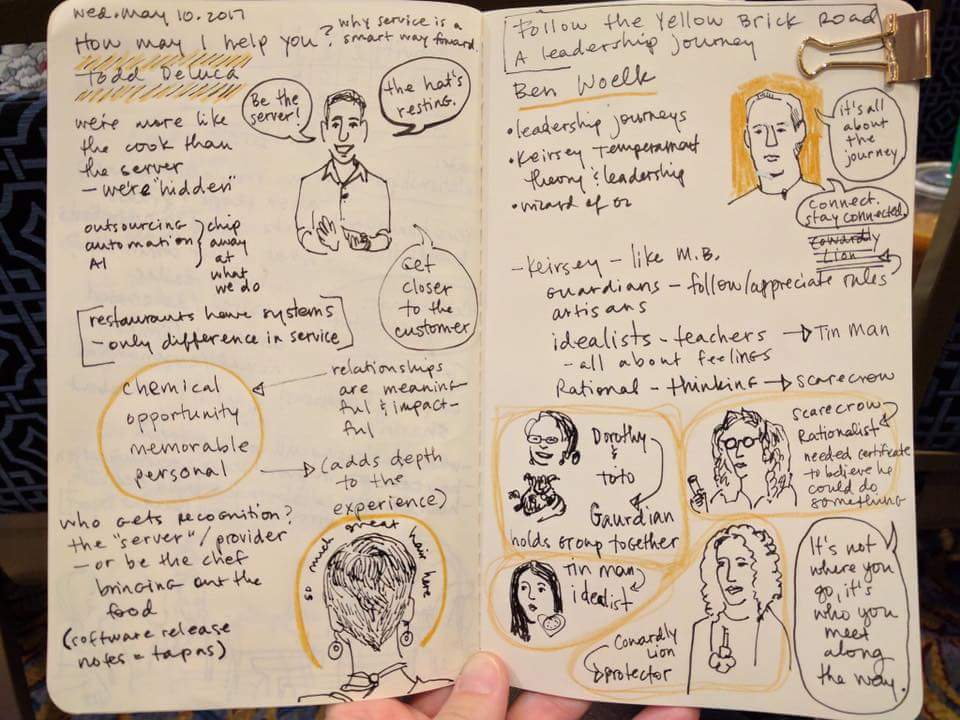
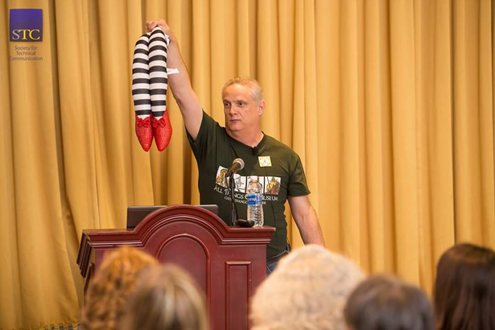
The article first appeared in the Summer 2018 Journal of the American Medical Writer’s Association and is reprinted here with their permission. The article grew out of a presentation of the same name that I did at the Society for Technical Communication 2017 Summit conference in Washington, DC.  I’ve provided pictures from the presentation, the slides, and a copy of the sketch notes by Elizabeth Alley after the post.


Follow the Yellow Brick Road: A Leadership Journey to the Emerald City

Have you ever felt as if your professional journey has a surprise around every bend? Much like Dorothy in the Wizard of Oz, have you found unexpected challenges along your career path? Are there lessons that can be applied from these challenges? Follow the Yellow Brick Road and discover lessons about leadership from the Wizard of Oz characters we’ve grown to love.

Introduction

I’ve had a lifelong fascination with MGM’s The Wizard of Oz2, both afraid of and intrigued by the flying monkeys and amused by Scarecrow, Tin Woodman, and Lion, but mostly engaged by a storyline that drew me along on their journey. For the last several years, I have studied leadership development, participated in leadership podcasts and webcasts, delivered presentations and workshops on leadership development, mentored emerging leaders, and championed the leadership abilities of introverts.

I thought it would be interesting to see what lessons we might draw for leadership by applying Keirsey Temperament Theory to the four protagonists of The Wizard of Oz: Dorothy, Scarecrow, Tin Woodman, and Lion. Even a cursory look at how they handled obstacles and interacted with each other provides valuable lessons for the workplace and personal life.

Keirsey Temperament Theory and the Wizard of Oz

In Please Understand Me II3, David Keirsey discusses how four main temperament types—Guardian, Rational, Idealist, and Artisan—may apply to these characters from The Wizard of Oz, as well as to our own leadership styles.

Dorothy, the Guardian Leader

Keirsey describes Guardians as the “glue” that holds society together. Guardians are concerned with order, with right actions, and with providing a secure environment for those under their charge. They are also helpful and concerned with the welfare of others. Guardians are stabilizing leaders. In both the book The Wonderful Wizard of Oz1 and the movie, Dorothy is the glue that holds the travelers together. Although she provides both stability and security to the party, Dorothy seeks a way to return to a safe environment: her home in Kansas with Auntie Em and Uncle Henry. Throughout their journey, Dorothy leads the party to The Wizard, convinced that he will help her to find her way home.

Scarecrow, the Rational Leader

Rational leaders are innovative, typically highly intelligent, and problem solvers. The Scarecrow believed that he had no brain. To the contrary, the Scarecrow was clearly the most creative in being able to analyze a situation and pose innovative solutions. For example, he devised the plan to get apples from a hostile apple tree by tricking the tree into throwing apples at the traveling party and coordinated the plan to rescue Dorothy by stealing and wearing the Winkies guards’ uniforms after Dorothy’s capture by the Wicked Witch.

Tin Woodman, the Idealist Leader

According to Keirsey, idealist leaders are catalysts because they energize productive human relations. Idealist leaders are enthusiastic, strive for harmony and care deeply for those in their charge. They are people-centered, intuitive, and patient, often putting the needs of individuals above the needs of the business or task at hand. The Tin Woodman believes that he has no heart or feelings and is unable to express love. Despite this, as an Idealist, he cares deeply for the well-being of the party. He races into action when the travelers face the Kalidahs (i.e., beasts with bodies like bears and heads like tigers), the most feared predators in the Land of Oz.

Lion, the Artisan Leader

Keirsey describes Artisan leaders as practical, with an eye to the realities around them. Artisan leaders deal with concrete problems (clear and obvious problems), not abstractions about what might occur. Artisans will do whatever it takes to solve a problem, are expeditious, and move rapidly to arrive at a solution. They excel at on-the-spot decision making but are impulsive and prefer to “fly by the seat of their pants.” Most of all, they are risk takers. Although lions are commonly considered to be the King of the Beasts, Lion believes that he lacks courage. However, Lion displayed bravery by protecting the team along the way to see the Wizard. For an artisan leader, courage means doing what needs to be done against all odds, even in the face of fear.

Applying the Lessons of Oz in the Real World

In Oz, three of our protagonists gain physical tokens from the Wizard that are related to their temperament types. Scarecrow (the Rational) receives a diploma (testimonials). Lion (the Artisan) receives a medal of courage. Tin Woodman (Idealist) receives a heart. The physical tokens helped these three understand their internal strengths and make it outwardly obvious what these character strengths are for each of them. Although we may not have physical tokens that help to remind us and others of our inner strengths, we are much more attuned to the role of these strengths in our workplaces. The Wizard tell Dorothy that ever since she came to Oz that she’s always had what she needs to return home, the slippers.

Since the 1995 publication of Daniel Goldman, Emotional Intelligence, there has been increasing recognition of the role of social and emotional intelligence in building productive workplace environments.10 The development of our emotional intelligence grows from understanding what drives us and how we interact with others. That’s where temperament theory comes in. Understanding our temperament type helps us perform more effectively, both as individuals and as a team. Learning about our strengths (and weaknesses) can help us become better leaders and relate better to our colleagues in the workplace. Keirsey’s temperament types provide additional insights.

[bctt tweet=”Understanding our temperament type helps us perform more effectively, both as individuals and as a team.” username=”hopeintrovert”]

My Leadership Journey

In my own leadership journey, I’ve found that learning more about temperament types through inventories available online (humanmetrics.com, 16personalities.com, keirsey.com) , discussions with trained MBTI practitioners has helped me identify what drives me. Understanding the strengths and weaknesses of my Rational temperament type (INTJ), helps me understand how I can best lead, playing to my strengths and compensating for my weaknesses.

That understanding has also helped me understand how to best work with a manager who’s not the same temperament that I am. For example, an Artisan manager will be concerned with results. The Artisan manager may not care about the details of the journey to achieve those results. An Idealist team leader who wants to talk about the contributions of the individual members of the team may find the conversation with an Artisan manager frustrating, because what’s important to the team leader (the people) may not matter to the Artisan manager. The Artisan manager cares about the results. Different temperament types have different expectations and priorities. I have a good friend who’s an Idealist leader. She’s very conscious of the potential impacts of a decision on team members. As a Rational, in my pragmatic approach to problem solving, the impact of a decision on individuals may not even occur to me.

[bctt tweet=”An Idealist team leader who wants to talk about the contributions of the individual members of the team may find the conversation with an Artisan manager frustrating” username=”hopeintrovert”]

[bctt tweet=”As a Rational, in my pragmatic approach to problem solving, the impact of a decision on individuals may not even occur to me.” username=”hopeintrovert”]

In Closing

The Wizard of Oz is as much about the travelers discovering their hidden strengths as it is an exciting story for children and for adults. Each of the travelers follows the Yellow Brick Road to self-discovery, finding that they possess the strengths they believe they lack. Much like Scarecrow, I’ve discovered that I already possess many of the strengths I thought I lacked. I encourage you to follow your own Yellow Brick Road to identify and harness your strengths.

[bctt tweet=”Each of the travelers in the Wizard of Oz follows the Yellow Brick Road to self-discovery, finding that they possess the strengths they believe they lack.” username=”hopeintrovert”]


References

  1. Baum, L. Frank. The Wonderful Wizard of Oz (Chicago, IL: George M. Hill Company), 1900.
  2. Fleming, Victor, Director. The Wizard of Oz. (Loew’s Inc. Hollywood, CA), 1939.
  3. Keirsey, David. Please Understand Me II. Delmar, CA: Prometheus Nemesis Book Company), 1998.
  4. Myers, Isabel Briggs. Gifts Differing. Palo Alto, CA: Consulting Psychologists Press, 1980.
  5. Stutz, Jonathan. The Scarecrow’s Brains: Leadership Lessons from the Wizard of Oz, in CEO World, Rankings and Research Magazine, June 15, 2014
  6. Woelk, Ben. An Introvert’s Journey to Leadership (Proceedings, STC Summit Conference, 2016).
  7. Woelk, Ben. Guest Editor. Intercom: Personality, Temperament, and Technical Communication, Vol. 64, #2 February 2017
  8. Woelk, Ben. Lessons Learned on an Introvert’s Journey to Leadership, EDUCAUSE Review, October 17, 2016
  9. Leadership Lessons from the Wizard of Oz. https://spectrain.wordpress.com/2010/04/08/leadership-lessons-from-the-wizard-of-oz/ Accessed April 17, 2017.
  10. http://www.danielgoleman.info/topics/emotional-intelligence/. Accessed 4/22/18.


Author disclosure: This article is based in part on my presentation at the Society for Technical Communication International Summit Conference in 2017


Author contact: ben@benwoelk.com

Extras


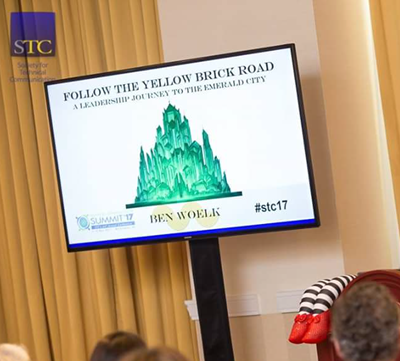
Follow the Yellow Brick Road cover slide

STC Summit 2017 Follow the Yellow Brick Road presentation slides

Elizabeth Alley sketch notes of the STC Summit 2017 presentation, Follow the Yellow Brick Road: A Leadership Journey to the Emerald City

Elizabeth Alley Sketch Notes from STC Summit 2017

Title slide for STC Summit 2017 presentation, Follow the Yellow Brick Road: A Leadership Journey to the Emerald City

Presenter Ben Woelk holding a pair Wizard of Oz witch legs with stripes and ruby slippers, from STC Summit 2017 presentation, Follow the Yellow Brick Road: A Leadership Journey to the Emerald City


  • 1
Gabby Pascuzzi headshot

Episode 025: Gabby Pascuzzi–Survivor, Vulnerability, and Authenticity

Category:Introverted Leadership,Leadership,Podcast,Trust

Episode 025 Show Notes: Gabby Pascuzzi

Introduction

Gabby Pascuzzi and Ben Woelk talk about Survivor, being vulnerable with your emotions, leaning in to who you are, and the need for authenticity in the workplace.

Gabby Pascuzzi headshot

Key concepts

  • Scary challenges show you what you’re capable of. We are prone to underestimating ourselves.
  • You have to embrace the struggle in some ways to be able to grow at all
  • Growth opportunities are almost always out there, and they don’t have to come in as extreme of a package as going on Survivor.
  • On challenging yourself–Are there ways that you can challenge yourself in the workplace, such as taking on a new role or volunteering to lead an initiative?
  • We are so much more capable of things than we think. And then when you accomplish that, you’re going to say, “Awesome, what’s the next thing? What’s the next challenge that I can do?
  • A positive side effect of trying something challenging, is that when all is said and done, you will have people cheering you on and that can really lift you up for the next challenge

Quotable

Taking on challenges that seem so huge and scary really shows you what you’re actually capable of. And it’s often a lot more than you think. We are really prone to underestimating ourselves. @GabbyPascuzzi

You have to embrace the struggle in some ways to be able to grow at all. @benwoelk

In servant leadership, just to be able to see your team grow is such an important thing. @benwoelk

Growth opportunities are almost always out there, and they don’t have to come in as extreme of a package as going on Survivor. @GabbyPascuzz

On challenging yourself–Are there ways that you can challenge yourself in the workplace, such as taking on a new role or volunteering to lead an initiative? @GabbyPascuzzi

We are so much more capable of things than we think. And then when you accomplish that, you’re going to say, “Awesome, what’s the next thing? What’s the next challenge that I can do?” @GabbyPascuzzi

A positive side effect of trying something challenging, is that when all is said and done, you will have people cheering you on and that can really lift you up for the next challenge. @GabbyPascuzzi

People want to be influenced by people that they feel they can trust. And when people believe that you’re being authentic, they are more likely to trust you. @GabbyPascuzzi

It always surprises me that people who are not willing to be authentic don’t really understand that people can see that. @benwoelk

Resources or Products Mentioned in this Episode

Links

Transcript

Ben: Joining us today is Gabby Pascuzzi. Gabby is a technical writer at Tenable, a cybersecurity company. She also competed on the 37th season of Survivor: David versus Goliath. I met Gabby at the 2019 STC Summit Conference in Denver where Gabby was our keynote speaker for our Honors event. Gabby shared her experience as a contestant on Survivor: David versus Goliath. Her presentation was well received and one of the hits of the conference. You can follow Gabby on Twitter @GabbyPascuzzi. I encourage our listeners to visit HopefortheIntrovert.com where you’ll find complete show notes including a transcript of today’s conversation.

Ben: Hi Gabby. Welcome back. I’m excited to have you on the Hope for the Introvert podcast. We had talked quite a bit in our conversation about turning weaknesses into strengths and also the importance of empathy in the workplace and even the ability to show emotion. When you had talked about vulnerability and empathy, you said that a good portion of your thought and conversation about that was in some ways embedded in your experience on Survivor. Would you like to talk about that for a bit?

Gabby: Yes, definitely. For me, Survivor was the biggest learning experience of my life and I’m so grateful that I got to go and play. And even though I didn’t win the million dollars–it’s extremely cliché, but I feel like I won in the life experience and just the realizations that came to me afterwards. And so much of that for me was rooted in the idea of vulnerability, because it is one of the most vulnerable things that one can sign up to do, to go on national TV like I did, and have my experience and my face and my thoughts and all my highs and lows highlighted on national TV in front of an audience of 8 to 9 million people that watched Survivor. So one of the things that I was rather well known for on my season of Survivor was that I very much wore my emotions on my sleeve.

Gabby: So there may have been more than a few scenes of me crying during some low times, being frustrated with people that were not cooperating with me. Like I said in our last conversation last time we talked, I tend to wear my emotions on my sleeve and of course Survivor is a very different experience than–the Survivor Gabby is not the same.Gabby that shows up to work every day. I’m not crying in the workplace every day, but it was a very interesting social experiment in a way because I knew that people across America would have very polarized opinions of my very visible emotions. Yeah.

Ben: Honestly, people across America have polarized opinions about just about everything!

Gabby: That is exactly right. Yep. [laughing] One thing that I learned from being on TV is you can’t please everyone, and there’s always going to be people who are contrary to one another. So after the show aired, I had people reaching out to me, and I would say it was about 95% positive. People would say, “Thank you for being so open with your emotions on the show and show that it’s okay to be vulnerable and it’s okay to talk about having low self esteem at times.” There was one scene on the show that was quite memorable where I had been placed onto a new Tribe where I wasn’t clicking with my fellow tribemates and there’s a scene of me teary-eyed in the morning crying because I felt I didn’t fit in. I felt like–first of all, I was scared that I would be voted out, which in the game means that you’ve been eliminated.

Gabby: But it was also a little bit of a deeper thing that I think dredged up feelings of insecurity. And I had people reach out to me and say, “Thank you for being honest about that. It’s nice to see vulnerability on TV, especially a reality TV show,” which sometimes doesn’t seem very authentic. And then you had 5% where people were saying, “Oh my gosh, you’re so annoying because you are always crying on my TV screen,” and “Get ahold of yourself, Woman, and pull–rein in your emotions. You’re such a whiner,” etc. And it was very, very interesting to observe and I knew that it would happen because people are not really comfortable with their own emotions and with their own vulnerability. And I think they were projecting that onto me where I’m quite comfortable with my emotions. I’m quite okay with it. But people were so upset that I dared show my emotions. So it was definitely a learning experience, largely about vulnerability

Ben: And I suspect that me, like most of your audience cannot even comprehend what it was like to be placed in a situation, in an environment like that where everything is kind of scrutinized and yes, it’s going to be a very visceral at times and just very–I cannot imagine having strong emotions–I doubt very much I would have made it through without crying either. [Gabby laughing] So I don’t think it’s a male-female thing at all. [Gabby laughing] I just think it’s a pretty amazing experience to have agreed to do that. And in some ways subject yourself to that.

Gabby: Thank you. Yeah, I think it relates to what we talked about in the last podcast, which is leaning into your weaknesses. And the whole experience was very scary in that way because you never know what challenge is going to pop up on Survivor, either mental or physical. So for those who aren’t familiar with the show, you know, we really aren’t eating, we are having maybe a quarter of a cup of rice every day, every other day sometimes when we were running low a scoop of coconut. So all of these challenges, of course those aren’t things I’m doing in my everyday life as a technical writer sitting behind my computer. But I feel like in taking on challenges that seem so huge and scary, it really shows you what you’re actually capable of. And it’s often a lot more than you think. I think we are really, really prone to underestimating ourselves just as human beings, and I think also for your audience listening to this.

[bctt tweet=”Taking on challenges that seem so huge and scary really shows you what you’re actually capable of. And it’s often a lot more than you think. We are really prone to underestimating ourselves. @GabbyPascuzzi” username=”hopeintrovert”]

Ben: And I don’t think that–we talked earlier on also, about the whole–in a sense challenging yourself and working on these things that feel like weaknesses. But in a sense it’s–you have to embrace the struggle in some ways to be able to grow at all. And I know for me, I have a hard time fathoming when people aren’t willing to try to grow, when people are very satisfied with where they are. And I don’t know whether I’m just wired a little bit differently, but it feels like that there should always be a drive. And now maybe I won’t feel like that eventually. But now it feels like there should always be a drive towards improvement and stretching and doing what I can do. And in terms of when you had mentioned servant leadership early on, that’s a really important role for me as well in terms of, not necessarily even working on building myself, but whatever team it is that I’m working with or people that I’m supporting. Just to be able to see them grow is just such an important thing.

[bctt tweet=”You have to embrace the struggle in some ways to be able to grow at all. @benwoelk” username=”hopeintrovert”]

[bctt tweet=”In servant leadership, just to be able to see your team grow is such an important thing. @benwoelk” username=”hopeintrovert”]

Gabby: I completely agree. Yeah, it’s an amazing opportunity to grow when you do something that scares you a little bit, and it’s so easy to become complacent or to become stagnant because–I mean and it’s not necessarily a bad thing, it might just be that you’re very happy in your life. But I think that the growth opportunities are almost always out there, and they don’t have to come in as extreme of a package as going on Survivor. But are there ways that you can challenge yourself in the workplace, such as taking on a new role or volunteering to lead an initiative that has been on your mind recently? Those are all things that I found when I returned from Survivor. I came back with a renewed enthusiasm that even though I was just returning to my job as a technical writer, if I saw something that I wanted to do, I did it. Or I asked someone, “Hey, can I do this? I think it’s a good idea. I’d be happy to lead it.” And I think that that helps everyone around you, but especially yourself.

[bctt tweet=”Growth opportunities are almost always out there, and they don’t have to come in as extreme of a package as going on Survivor. @GabbyPascuzzi” username=”hopeintrovert”]

[bctt tweet=”On challenging yourself–Are there ways that you can challenge yourself in the workplace, such as taking on a new role or volunteering to lead an initiative? @GabbyPascuzzi” username=”hopeintrovert”]

Ben: So one of the key things that you got out of being on the program besides notoriety and critics and supporters, is this whole, I think, willingness to stretch more.

Gabby: Yeah, I would say so. And I think that’s the thing about taking challenges that I would encourage the listeners to do. Is it almost becomes this addictive sort of cycle where you do a scary challenge that you didn’t think you weren’t sure if you’d be capable of. You will be capable of it because I believe in you and you–we are so much more capable of things than we think. And then when you accomplish that, you’re going to say, “Awesome, what’s the next thing? What’s the next challenge that I can do?” And then before you know, you are pushing yourself more and more to do. So really I would say start small. If you’re able to do even what feels like a tiny challenge. Accomplishing that might make you more prone to saying yes to future challenges.

[bctt tweet=”We are so much more capable of things than we think. And then when you accomplish that, you’re going to say, “Awesome, what’s the next thing? What’s the next challenge that I can do?” @GabbyPascuzzi” username=”hopeintrovert”]

Ben: Okay, so one thing about Survivor, but it’s also in the workplace as well. I mean Survivor obviously makes it your Tribe. I mean it’s very out there and no question that you are hoping for support from your Tribe. So Gabby, you’re talking about this willingness to try new things and to start small, to continue to try new things and how there’s almost, you didn’t use the word inertia, but I’ll use that where there’s a sense of, “Well, I’ve done that, well what’s next, what’s next? And you keep climbing the ladder in some ways. That seems to be mainly an internal motivation towards doing things. It doesn’t necessarily seem to be motivated by external rewards or anything like that, but I’m also curious as to what–has it been important for you to know that people are supporting you, that they believe that you can do things? Or are you maybe a little bit like me in the sense where I’m just stubbornly independent and I’m going to do it anyway. How has it mattered whether people are supportive of you? In what ways does that matter most for you?

Gabby: Yeah, it does matter. I agree with you. I think I get a lot of strength from that internal motivation, but one unexpected side effect has been the support that–after Survivor for example, I had so much support from people I had never met before on social media, or at STC when I met fellow tech writers, or when I came back and my tech writing team was like, “That’s awesome. I can’t believe you did that.” It does kind of encourage you and to know that you have people that support you and believe in you, I think is an important part of growing as well. You want to feel like you have the support of friends, family, Allies in the game of Survivor–we call them Allies–our tribemates who we’re working with, our coworkers. So I think that you’ve identified another positive side effect of trying something challenging, is that when all is said and done, you will have people cheering you on and that can really lift you up for the next time that you have a challenge.

[bctt tweet=”A positive side effect of trying something challenging, is that when all is said and done, you will have people cheering you on and that can really lift you up for the next challenge. @GabbyPascuzzi” username=”hopeintrovert”]

Ben: Yeah. So it’s really, really interesting conversation so far, and you’ve alluded to some things I think that people should think about and be willing–obviously we’re chatting about this a lot, about willing to stretch and try new things. You also mentioned early on on that you’re not really in a position of leadership in the workplace, but you are definitely, I think in a position of influencer. And I think the social media following from being on Survivor‘s probably puts you in position where you are in a sense influencing people as well or at least giving them something to chat about. What recommendations do you have for people who really want to become influencers? You know, maybe they don’t have a leadership path per se in their workplace, but what recommendations would you have for them?

Gabby: I’d like to bring up the idea that we talked about before, which is leaning in again. So to me it’s leaning into who you are. I think people are really drawn to authenticity. And I think that that is why people were drawn to me after Survivor is, I wasn’t just a character on their TV screen. People could tell that I was really being myself. And I think if you want to be in any position of influence, people want to be influenced by people that they feel they can trust. And when people believe that you’re being authentic, they are more likely to trust you because they see you, you’re showing up, all of you. And so again, it’s listening to what are your strengths, what can you lean into? So for example, at work, I really like moderating conversations and listening to everybody’s viewpoints and then giving my unbiased assessment of what’s been presented.

[bctt tweet=”People want to be influenced by people that they feel they can trust. And when people believe that you’re being authentic, they are more likely to trust you. @GabbyPascuzzi” username=”hopeintrovert”]

Gabby: So I think you can still influence things like culture. You can influence interpersonal relationships on the team by being a kind team member, by being a good listener, by being empathetic. So influence really can come from the smallest action. It might just be reaching out to somebody because they said they were having a hard day, and that relationship that you foster may help you in a professional sense later down the road when you need a favor being done. But more than that, it’s about showing up and being authentic and being a person who people want to be around.

Ben: And I think the thing is that’s–that authenticity is absolutely critical and what always surprises me, is I think people who are not willing to be authentic don’t really understand that people can see that. Where although they may assume that whatever face they provide in our front or persona they have in the workplace, that if it’s not who they really are, I think that people can see that for the most part.

[bctt tweet=”It always surprises me that people who are not willing to be authentic don’t really understand that people can see that. @benwoelk” username=”hopeintrovert”]

Gabby: Yeah, people are a lot more intuitive than we like to admit. And I think I completely agree with you. It happened on Survivor, too. People would have this sort of facade up, and I was like, “I can see right through this. I can see that you’re, you’re hiding something,” or “You’re not–you’re trying to come off too polished and I’m not really getting a sense of who you are and it’s not making me really comfortable working with you,” because I feel like it’s this robotic transactional relationship as opposed to, “You know what? We’re humans and we need to do a job. We need to work together, but we’re also just people.”

Ben: Yeah, I think that’s really important to bear in mind with this.

Ben: Gabby, this has been a great conversation today. Enlightening for me. I’m sure it’s been enlightening for our listeners as well. One thing I like to ask is what’s one thing about you that people would be surprised to learn? And obviously it’s not going to be the Survivor thing at this point. [Gabby laughing] So what is something else?

Gabby: Ooh, that’s a good question. I think something that surprises people who meet me is that I actually didn’t grow up in the United States. I was born in Germany. I lived for 10 years in Singapore and then I went to high school in the Philippines. And I only came to the US for college and I have been here since then, but people are always surprised by that, and it’s actually a very important part of who I am, because it made me, I think, a more open-minded person, that I really try to be cognizant of cultural differences, especially in the workplace.

Ben: Yeah, I think that’s a good point, because I know for many of us who don’t get out of the US at all, we’re really surprised when things don’t work the same way in other countries and things are just done differently. So I think that’s a really important perspective. It must be an interesting perspective having grown up in these other locations and then–gives you a little probably more objective view of what’s going on, where you have seen what’s normal in other places and as opposed to what may be normal here.

Gabby: Yeah, definitely grateful for those experiences.

Ben: Well, awesome. Thanks, Gabby. I really appreciate you spending time with me on the podcast. It’s been a wonderful conversation and I look forward to having you on again, where, who knows what subjects we’ll explore.

Gabby: Thanks, Ben. It was so great talking to you too.


Extras

Survivor David vs. Goliath: Gabby Pascuzzi on Tears, Approaching Peers and Online Cheers

Ponderosa Interview: Gabby Pascuzzi From Survivor: David Vs. Goliath

Gabby's Twitter banner

Gabby’s Twitter banner


  • 2
Gabby Pascuzzi headshot

Episode 024: Gabby Pascuzzi–Vulnerability and Leaning In

Category:introversion,Introverted Leadership,introverts,Leadership,Podcast,STC,Summit

Episode 024 Show Notes: Gabby Pascuzzi

Introduction

Gabby Pascuzzi and Ben Woelk talk about the importance of vulnerability and openness in the workplace, empathy, and leaning into weakness.

Gabby Pascuzzi headshot

Key concepts

  • Remote work can be challenging because so much of communication is non verbal.
  • Vulnerability and openness can be a strength
  • When you lean into a perceived weakness you may find it’s really a strength
  • Leaning into a weakness can help you improve that area
  • Empathy is a key leadership trait
  • No one started off as an expert and you do yourself a disservice if you write yourself off and say, “I can’t do that.”

Quotable

On remote work–The nuances and so much of communication is nonverbal, that you really have to work hard to make sure that you’re not misconstruing something that somebody said…making sure that your tone is appropriate and thoughtful. @gabbypascuzzi

On authenticity–at the end of the day, even if we’re writing alone, we still need our teammates. And one way to build a stronger team is to let them see who you are. @gabbypascuzzi

Being comfortable with my emotions is tied to one of my biggest strengths, which is being vulnerable and being authentic and just being really present, bringing my whole self to work. @gabbypascuzzi

Empathy helps you put yourself in other people’s shoes so that you are able to do more of this servant leadership style where you’re serving the people under you. @GabbyPascuzzi

Leaning into weaknesses, meaning things that you are not very naturally skilled at. We get so obsessed with “What is your strength?” @GabbyPascuzzi

Nobody started out as an expert and you really do yourself a disservice if you write yourself off, and say, “Nope, I can’t do that. That’s a weakness,” because you don’t know if you may have more skill then you thought or you’re able to improve. @GabbyPascuzzi

Resources or Products Mentioned in this Episode

Links

Transcript

Ben: Joining us today is Gabby Pascuzzi. Gabby is a technical writer at Tenable, a cybersecurity company. She also competed on the 37th season of Survivor: David versus Goliath. I met Gabby at the 2019 STC Summit Conference in Denver where Gabby was our keynote speaker for our Honors event. Gabby shared her experience as a contestant on Survivor: David versus Goliath. Her presentation was well received and one of the hits of the conference. You can follow Gabby on Twitter @GabbyPascuzzi. I encourage our listeners to visit HopefortheIntrovert.com where you’ll find complete show notes including a transcript of today’s conversation.

Ben: Hi Gabby!

Gabby: Hi Ben.

Ben: I’m excited that you’ve agreed to join us today. I’m very much looking forward to chatting with you. I’m sure we will chat about Survivor, but I’d like to talk a little bit about your career in general, and we’re going to talk about weaknesses and strengths and how those should maybe be handled in life and in the workplace. So you work at Tenable, I’m in Cybersecurity, so I’m actually familiar with Tenable, but can you tell us a little bit about what you do for them and what your workplace is like?

Gabby: Yeah, so I have been a technical writer at Tenable for a year and a half now. And I write mostly user documentation, our user guides for a couple of different products. One is Nessus, which is a vulnerability scanner. Another is Tenable IO, which is our platform. And yeah, a lot of user guide content which is pretty, pretty fast. We are always coming out with new features. So we do work in an agile environment.

Gabby: I have only been a technical writer for–this is my fourth year, so this is pretty early in my career and I’ve found that it’s been really challenging, but really interesting. And another challenge that has come with working for Tenable, which is one of the things I love as well, is it’s largely a remote company. So a lot of the employees are remote. The headquarters is in Maryland, but I live in Virginia and we do a lot of our coordinating and communicating through Slack and through Zoom calls, and we have people not only in this area, but also spread across the country and sometimes in different countries. We have some people in Ireland, some people out of India, so it’s a very global company, which makes for an interesting workplace at times. But yeah, very fast moving and I’m excited to be working for them.

Ben: What led you into technical writing as a career?

Gabby: I had no idea that technical writing existed until right before I graduated from college. I went to school at Carnegie Mellon University in Pittsburgh and I majored in Linguistics, and then I added a second major, which was in the English Department called Professional Writing, which is–I always laugh because what’s the opposite of that? Like unprofessional writing? But, they had a few technical writing classes and I had always been pretty technically minded. I always did well in science and I had taken an introductory computer science course at CMU, which is a school that’s kind of known for that.

Gabby: I found that the technical writing classes really merged my skills in writing, which I had always been interested in English and writing, but I had never been particularly creative. I was always more on the technical side. So that’s when I discovered that technical writing existed and allowed me to really combine those two skills.

Ben: Yeah, it’s interesting. I took linguistics classes in college also, though I actually did an anthropology undergraduate, which I’m certainly not doing that now, but I found the linguistic stuff absolutely fascinating–just how much it could inform a culture and tell you about a culture, but also in some ways determine how a culture acted in some ways. So it was always a really, really interesting field. I didn’t go there, but it’s definitely an interesting field. So do you work as part of a team at Tenable? How often do you see each other?

Gabby: Yeah, so I am part of our technical writing team and there are 10 of us and we have a manager that’s just our manager for the technical writers, but each one of us focuses on a different product. And so then we’re also integrated onto those development teams. I’m pretty well connected to the developers for the products I write about as well as the product managers. And as you know, with all of us tech writers we’re always talking to everybody. So you get to know a lot of people, even though I’m not seeing them all face to face all the time, and my team gets together at least once a quarter, which I feel like is important for us to have that bonding time and remember that each other are people, not just our little screens. We Zoom call a lot so we make sure to do video calls. So we do see each other face to face, which I feel like is important in a remote context, because you don’t want to just always be communicating via Slack message or email and then you really–you don’t even know what the other person looks like or sounds like and you lose some of that personal touch.

Ben: Yeah. It’s interesting because at the Summit conference where I met you there was one woman I had been mentoring for the last three years, and we’d never seen each other face to face. We’d seen each other on our screens through Slack calls or whatever. But it was so funny. It’s, “Oh, you’re really tall,” and all that sort of thing, which you obviously can’t tell that when you’re just talking virtually, but I agree. I think that face-to-face connection makes such a dramatic difference in terms of–well you catch nuances that you wouldn’t catch otherwise and just getting to know each other a little bit better.

Gabby: Yeah, definitely. I mean, working for a remote company definitely has its pros and cons and a pro is that you really have awesome team members that are not limited by geographic location. Right. We have some brilliant people that they happen to live a state over so they can’t come into headquarters, so it’s great in that way. But yeah, there are drawbacks, which is that you don’t have those face to face. I agree with what you said, the nuances and so much of communication is nonverbal, that you really have to work hard to make sure that you’re not misconstruing something that somebody said as well as you have to make sure your intentions are clear when you’re just chatting over Slack, making sure that your tone is appropriate and thoughtful. And that is, that’s relevant to us as writers, you know, because we care about our tone, but definitely something to keep in mind.

[bctt tweet=”On remote work–The nuances and so much of communication is nonverbal, that you really have to work hard to make sure that you’re not misconstruing something that somebody said. @gabbypascuzzi” username=”hopeintrovert”]

Ben: Yeah, definitely. So I have a question. For our listeners, one of the things that we do, is our guests fill out a questionnaire and they describe themselves in the questionnaire. And Gabby described herself as an awkward extrovert, which is interesting. And I was curious, what do you mean by that and how does that play out?

Gabby: Yeah. So when you asked me to be a part of your podcast, the first thing I said to you was, “You know, I’m not really an introvert. I am actually an extrovert”, but I can relate to introverts because I can be awkward and I can be shy at times. And not to call introverts awkward and shy [laughing], but I feel like a lot of introverts might describe themselves that way. So to me it means that I am extroverted. I really get my energy from being around people, talking to people. That’s how I recharge. I’m very outgoing, but there are definitely times where I find it hard to reach out, especially if it’s someone that I don’t know very well. And so there’s definitely a little bit of a hump for me to get to that extroverted part of myself.

Gabby: Being an awkward extrovert is also sometimes challenging in my remote workplace because, for all of us as technical writers, we have to initiate a lot of conversations because we need to ask somebody for information. We need to ask for clarity; we need to ask for reviews. So it’s hard because a lot of technical writers are introverted or are a little awkward, when really we need to be very bold and not shy. And that can be really hard for a lot of us. It’s hard for me and it’s something that I’ve definitely had to work at, just being confident that, okay, I’ve got to get an answer so I’ve got to reach out and you really can’t be too shy about it.

Ben: Okay, awesome. So what do you see as your main weaknesses and strengths?

Gabby: I think my weaknesses and strengths are very linked and I feel like that’s true for a lot of us. So when I think about my weaknesses, I think about things that affect me. Sometimes I can be a little disorganized. Sometimes I have a hundred ideas at once. I like to multitask. And that can be challenging. Things that other people have said are weaknesses of mine, and this actually for me, it came out in the context of Survivor, which I’m sure we’ll talk more about later, is that I am a person that definitely wears her emotions on her sleeve. [laughing] So I think that some people might view that as a weakness because you’re in a workplace, you’re in a professional place, and it’s not to say I’m having emotional breakdowns in the middle of the workday, but I’m pretty open with my emotions, and some people might take issue with that, and I think it ties in perfectly to what is my strength.

Gabby: And I actually feel that being comfortable with my emotions is tied to one of my biggest strengths, which is being vulnerable and being authentic and just being really present, bringing my whole self to work. I don’t feel like I bring a fake version of myself to work. And, what that means to me is that I’m able to show up and connect with my peers, my coworkers, and not just be a robot behind a screen. Especially, like I said, especially if we’re just talking over Slack, somebody that’s just asking for this, asking for that, let’s get the job done with no sense of personability. Is personability a word? [laughing].

[bctt tweet=”Being comfortable with my emotions is tied to one of my biggest strengths, which is being vulnerable and being authentic and just being really present, bringing my whole self to work. @gabbypascuzzi” username=”hopeintrovert”]

Ben: Sure. We’ll go with it.

Gabby: The thing is, as writers and as linguists, we can just make up words. But yeah, if you’re not bringing your authentic self to work, I feel like you’re missing out on an opportunity to build those connections with your peers.

Gabby: And at the end of the day, even if we’re writing alone, we still need our teammates. And one way to build a stronger team is to let them see who you are. And that doesn’t mean that there shouldn’t still be boundaries and that there aren’t things that are appropriate and not appropriate to talk about or to show at work. But when you’re able to be–have a little fun and tell people when you are really excited about something or tell your teammates, “I’m really frustrated about this, can I vent to you for a second?” And maybe you’ll find out that they’ve been experiencing the same issues too. And what can you guys do about it? Maybe you can trouble–you can brainstorm how to fix this issue. Maybe it’s a culture issue that you guys are going to bring up in your next team meeting, but that really isn’t possible unless you are open and show up every day. So that was a long answer to your question.

[bctt tweet=”On authenticity–at the end of the day, even if we’re writing alone, we still need our teammates. And one way to build a stronger team is to let them see who you are. @gabbypascuzzi” username=”hopeintrovert”]

Ben: No, but it’s very interesting issue because I think for most of us in the workplace, the idea is that–maybe the idea is that you squashed down your emotions and you do your work and then you some ways you are not yourself in the workplace. There was–actually part of the Next Big Idea Club, which is a book club, which I don’t read nearly as many of them as I should, but one of their recent offerings is called No Hard Feelings: The Secret Power of Embracing Emotions at Work. And that’s by Liz Fosslien and Mollie West Duffy‎. And that one gets very much into really being, I think completely at the workplace and recognizing that you need to be able to share your emotions. And I think that’s in some ways it’s a corrective, I think to a lot of the business type writing that’s been out there in terms of what are we supposed to be like in the workplace. We’re supposed to be very just not emotional or just always focusing on work. So I think it’s a really interesting discussion and an interesting thing for a lot of people.

Gabby: Yeah, definitely. That book sounds really interesting. I am going to have to take note of that and read that. It’s something that I’ve thought a lot about. Can we have emotions at work that are appropriate and be more authentic? Rather than squashing them down because everybody knows what happens when you squash down emotions. They are going to bubble up. And I don’t think people at your workplace would like that very much either, if suddenly there was an explosion of emotions that you had been letting pent up, because you weren’t comfortable talking through anything that came up. And I think with emotions and with emotional intelligence also comes empathy. And empathy is very important for interpersonal skills in the workplace, especially if we’re talking about leadership skills. Empathy is one that I feel you must have as a leader; it helps you understand if you have people below you, it helps you relate to them. It helps you put yourself in other people’s shoes so that you are able to do more of this servant leadership style where you’re serving the people under you.

[bctt tweet=”Can we have emotions at work that are appropriate and be more authentic? Because everybody knows what happens when you squash down emotions. They are going to bubble up. @gabbypascuzzi” username=”hopeintrovert”]

[bctt tweet=”Empathy is very important for interpersonal skills in the workplace, especially if we’re talking about leadership skills. @gabbypascuzzi” username=”hopeintrovert”]

[bctt tweet=”Empathy helps you put yourself in other people’s shoes so that you are able to do more of this servant leadership style where you’re serving the people under you. @GabbyPascuzzi” username=”hopeintrovert”]

Gabby: And I know for me, I’m not in a real leadership position in my team. I’m a technical writer. I’m on the same level as a lot of my peers. But for example, in a group discussion, so once every two weeks we have a group meeting where we revisit our style guide and we make decisions on outstanding items where we haven’t come up with a standard for our style, or we revisit past decisions if they’re not working for us. And it’s definitely a group conversation. And I think when you are empathetic, for example, in that situation, you’re able to understand everybody’s viewpoints and listen to each person fairly and not be biased and not take things personally if somebody’s opinion doesn’t agree with yours. So in that kind of situation, empathy really is key.

Ben: And I think that gets back to our comments early on about nonverbal communication. And I’ve just seen too many times somebody gets an email and they read it–I’m assuming they misread it in terms of the emotion or the intent that was behind it. But having that ability to see each other face to face and catch those nuances is critical as well.

Gabby: Definitely. Yeah. So many times things can get misconstrued. And I think if we all just try to remember that most people are coming from a good place and things usually are not personal in the workplace, then hopefully we can avoid some of that. And that also comes with lowering your guard a little bit and not being so on defense. Right? If you’re always playing defense, then you’re possibly going to take things as a personal attack, when really it may have just been somebody posing an alternative and it’s nothing personal against you. And the more empathetic you are able to be, the more open minded and emotionally intelligent that you are, the easier it will be for you to listen to feedback like that and not take it super personally.

[bctt tweet=”The more empathetic, the more open minded and emotionally intelligent that you are, the easier it will be for you to listen to feedback and not take it super personally. @GabbyPascuzzi” username=”hopeintrovert”]

Ben: Yeah, and I think it’s hard. For instance, if I have an idea of doing something in a different way and I’m very, very invested in it and I’m very, very passionate about it, but then it’s not received well, it’s very hard for that not to feel like there’s a personal element there. Mainly because I’ve probably invested too personally in whatever the idea was.

Gabby: I’m definitely guilty of that. Yeah. I’ve seen it go that direction as well. And it’s really hard sometimes to not feel attached to your work because we do care about it so much. And you know that that happens to me even with things as simple as I send things for a peer review and they didn’t like the word I chose. And I’m like, “What do you mean? I really thought about that word.” Because you really have to remind yourself sometimes it’s not personal. If you’re on a team, you’re working together to create the best outcome and there are always going to be differences of opinion.

Ben: Yeah. It’s funny because you’re gonna get that. But that was, what do they, what are they saying about me if they don’t like my word, you know? Yeah. It’s funny. Don’t they appreciate me?

Gabby: Yeah, definitely.

Ben: Gabby, one thing that you had mentioned to me before we started recording today, was this idea of leaning into weakness. And when we had talked about leaning in, you said it wasn’t necessarily in the sense of the book for women in the workplace called Leaning In. Can you expand on that a little bit? What do you mean by leaning in and especially in the leaning into your weaknesses?

Gabby: Yeah, I am very big on this idea of leaning into either what you perceive to be your own weaknesses or what others perceive to be your weaknesses. When I think about the idea of leaning into your weaknesses, I see two halves to this. One is the idea that what people may see as a weakness is not really a weakness. So by leaning into it, you’re really highlighting a strength of yours. So for example, like I mentioned before, as a person myself who is very in tune with her emotions, some people may see that as a weakness. I see it as a strength. So if I know that I can’t really help but be emotional, let me think about how I can use that as a positive influence in the workplace.

[bctt tweet=”Leaning in is the idea that what people may see as a weakness is not really a weakness. So by leaning into it, you’re really highlighting a strength of yours. @GabbyPascuzzi” username=”hopeintrovert”]

Gabby: So can I use it to connect with a coworker that is having a bad day? And I’m able to empathize with them and we’re able to talk and, and I help then refocus is, is it possible for me to use my emotions, my emotional intelligence to have a tough conversation with a manager about a culture problem that I see that needs to be addressed that I noticed because I’m in tune with my emotions. So I think when you lean into something that is supposedly a weakness, it actually might highlight it as a strength.

Gabby: The other half of it is leaning into weaknesses, meaning things that you are not very naturally skilled at. So I really feel like sometimes we get so obsessed with “What is your strength?,” “What are your strengths, what are your strengths? “And that’s great. We should also be doing jobs that highlight our strengths. However, you don’t want to become so scared of leaving your comfort zone that you never try anything new. For example, if I am scared of public speaking and I consider that a weakness of mine, what if you really tried to lean into that and signed up for a toastmasters club or went to a public speaking class or volunteered to lead the next meeting that your team was having? If you really try to push yourself outside of your comfort zone and do things that make you uncomfortable, I wonder if you might discover that it’s not as big of a weakness as you may have thought.

[bctt tweet=”Leaning into weaknesses, meaning things that you are not very naturally skilled at. We get so obsessed with “What is your strength?” @GabbyPascuzzi” username=”hopeintrovert”]

[bctt tweet=”If you really try to push yourself outside of your comfort zone and do things that make you uncomfortable, I wonder if you might discover that it’s not as big of a weakness as you may have thought. @GabbyPascuzzi” username=”hopeintrovert”]

Ben: Well, I think you also have the perception when looking at someone who’s been speaking for a while, that they’ve always been a good speaker. And I think realizing that it is a process. And it’s a learning process and that goes from everything from initial podcasts as opposed to 20 episodes in, to being willing to speak in front of a team meeting to maybe addressing several hundred people like you did at the STC Honors Event. I think what happens is I think you get more comfortable with it the more often that you do it in that example and I think the leaning into that weakness or knowing it’s something that you want to maybe turn into a strength. I think makes a lot of sense.

Gabby: Yeah, I definitely agree. We really have to remember that not everybody–actually, nobody started out as an expert and you really are just doing yourself a disservice if you write yourself off, and say, “Nope, I can’t do that. That’s a weakness. I don’t do that. I’ve never done that. And I never will do that,” because you don’t know if you may have more of a skill there then you thought or just that you’re able to improve from where you were at one point.

[bctt tweet=”Nobody started out as an expert and you really do yourself a disservice if you write yourself off, and say, “Nope, I can’t do that. That’s a weakness,” because you don’t know if you may have more skill then you thought or you’re able to improve. @GabbyPascuzzi” username=”hopeintrovert”]

Ben: Well that’s awesome. I think there’s some very good things here. And Gabby, I’d like to thank you for being on the podcast and I’m looking forward to our next time together and we will, I promise our listeners, we will talk about Survivor.

Extras

Survivor Profile

Gabby Pascuzzi on Survivor


Subscribe to Blog via Email

Enter your email address to subscribe to this blog and receive notifications of new posts by email.

Join 505 other subscribers

Categories

Support Introverted Leadership on Patreon

Blubrry affiliate banner