
The Quiet Blueprint: A Strategic Networking Guide for Introverted Leaders
Category:EDUCAUSE,introversion,Introverted Leadership,introverts,Leadership,Lessons Learned,Podcast,Social Networking,Social NetworksWhen we think about professional networking, we usually picture crowded conference halls and making painful small talk over a stack of business cards. But for many of us in higher ed and IT, that isn’t our daily reality anymore. Our teams, stakeholders, and peers are often highly distributed—spread across different campuses, departments, or working completely remotely.
A past guest on my podcast, Andrea Childress (now CIO and Assistant Vice President for ITS at the University of Nebraska at Kearney), talked about what it was like when her university’s IT organizations combined, leaving her managing teams spread across multiple cities. She admitted that initiating relationships purely for the sake of it is a real challenge in that environment.
But she also reminded me of a fundamental truth: “I can’t overestimate how valuable it is to have a network, to lean on that network, [and] to provide support to that network.”
So how do we do that without the sheer exhaustion of “virtual schmoozing”?
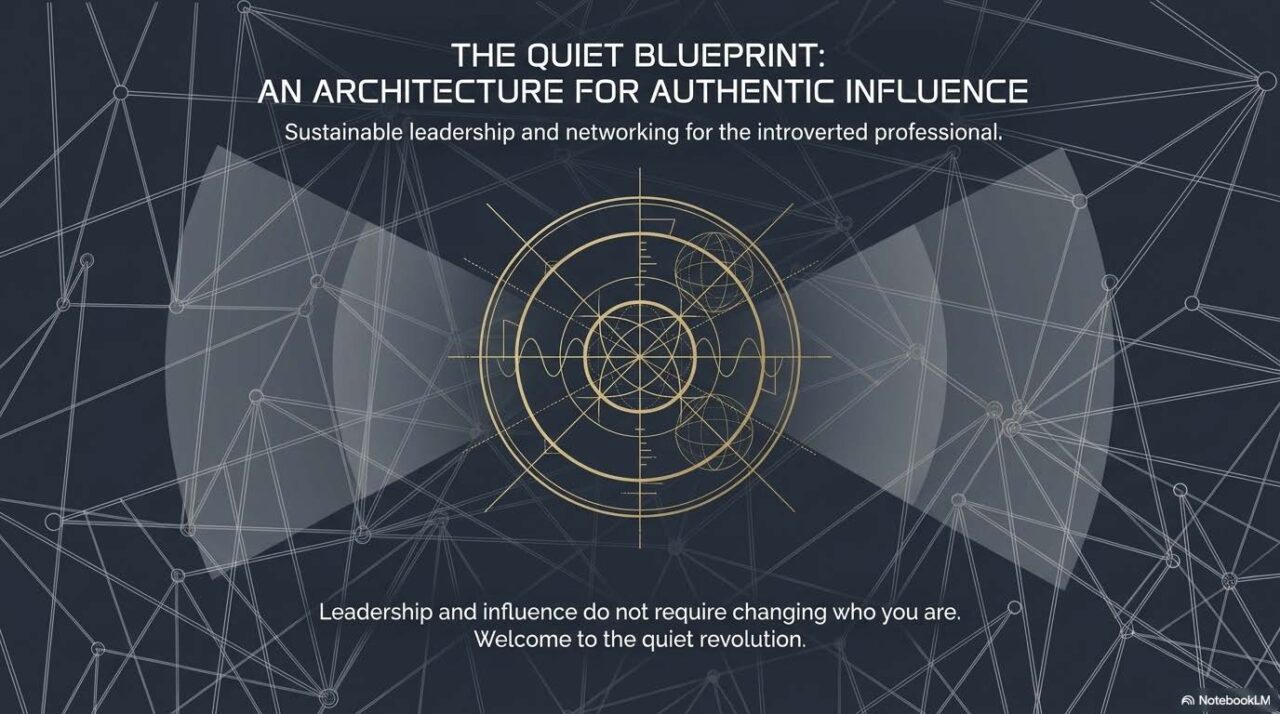
I’ve mapped out a framework I call The Quiet Blueprint: An Architecture for Authentic Influence. It’s a sustainable way for introverted professionals to build real, lasting connections. Here is how we can shift the paradigm.
Redefining Networking: Depth Over Breadth
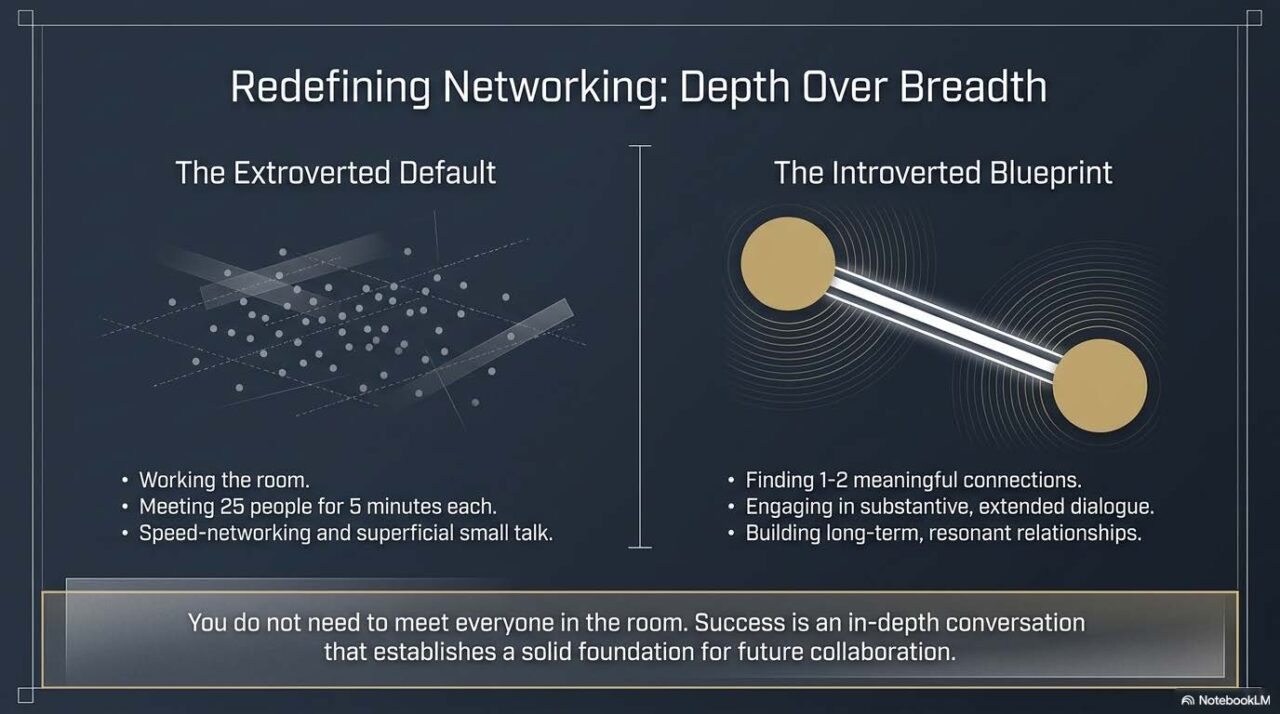
The traditional, extroverted approach to networking is all about “working the room”—meeting 25 people for 5 minutes each. For introverts, that’s a quick recipe for superficial small talk and immediate burnout.
We need to flip that metric. Success isn’t about how many hands you shake; it’s about finding one or two meaningful connections and having a real, extended conversation. You don’t need to meet everyone in the room to build a solid foundation for future collaboration.
Practical Coping: Two Anchors in the Moment
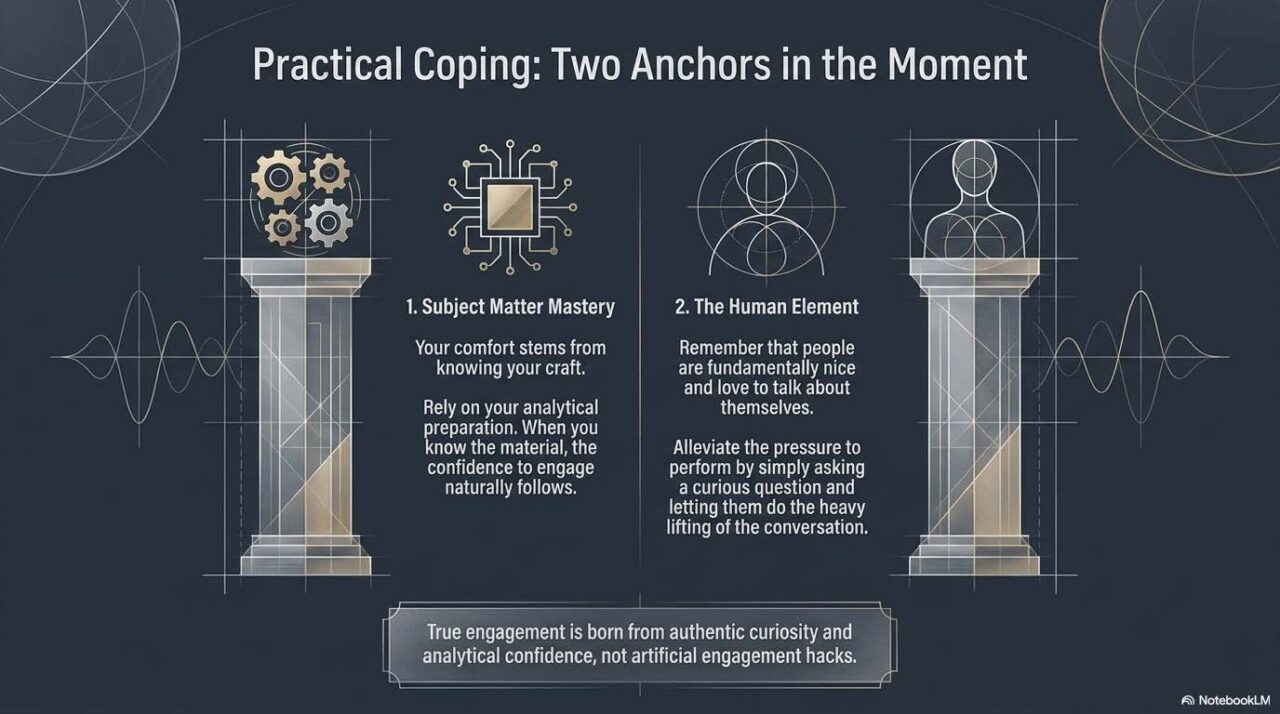
When you find yourself in a high-stakes networking environment, it’s easy to feel overwhelmed. I find it incredibly helpful to rely on two practical “anchors” to take the pressure off:
-
Subject Matter Mastery: Lean on your analytical preparation. When you truly know your craft, the confidence to engage naturally follows.
-
The Human Element: Remember that most people are fundamentally nice and, honestly, they love to talk about themselves. You don’t need to perform; just ask a curious question and let them do the heavy lifting.
The Energy Engine: Managing the Introvert Battery
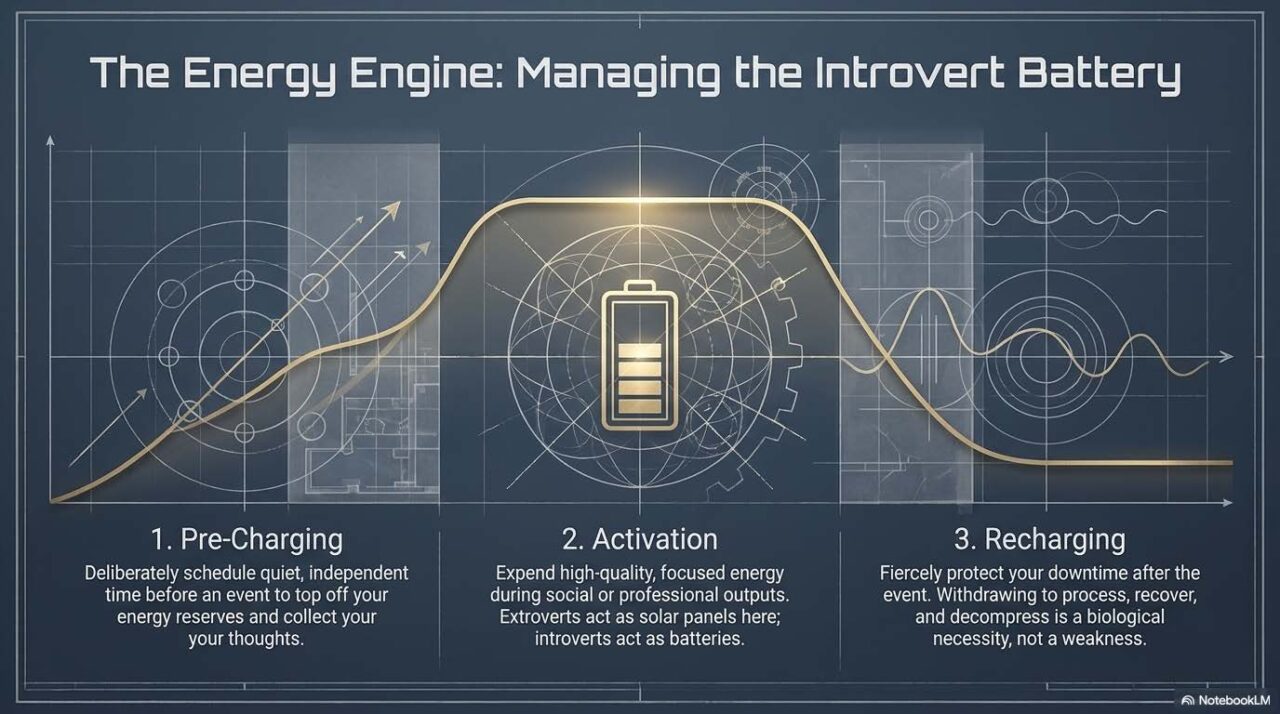
Extroverts are a bit like solar panels—they actually draw energy from busy social environments. Introverts, on the other hand, function like batteries. We expend high-quality, focused energy when we interact with others, and we have to be highly intentional about how we manage that charge.
To keep from running on empty, I look at energy management in three distinct phases:
-
Pre-Charging: Deliberately scheduling quiet, independent time before an event to top off your energy reserves and collect your thoughts.
-
Activation: Giving focused, authentic energy during the actual interaction.
-
Recharging: Fiercely protecting your downtime afterward. Slipping away to process, recover, and decompress isn’t a weakness—it’s a biological necessity.
Cultivating a Cohort of Trust
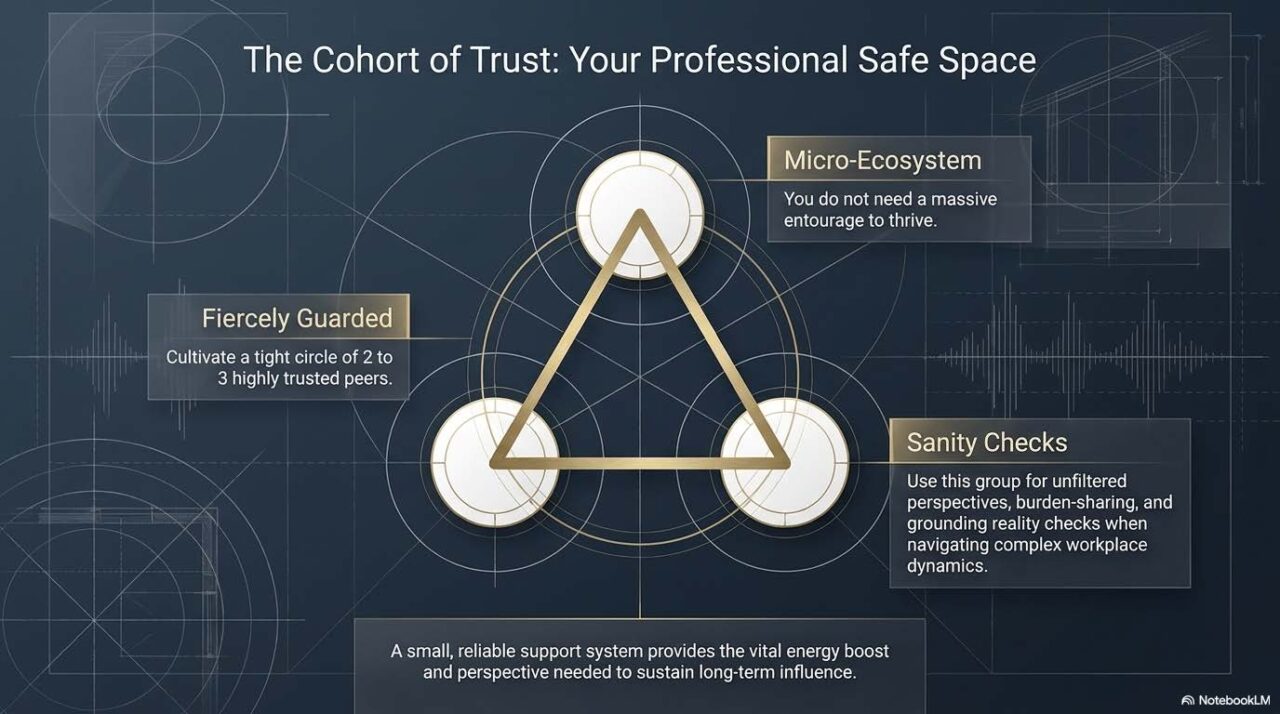
You don’t need a massive entourage or hundreds of superficial contacts to thrive in your career. True, sustainable influence is built within a small “micro-ecosystem”—a tight circle of just two to three highly trusted peers.
I encourage you to fiercely guard this inner circle. This is the group you go to for unfiltered perspectives, mutual support, and those vital “sanity checks” we all need when navigating complex workplace dynamics.
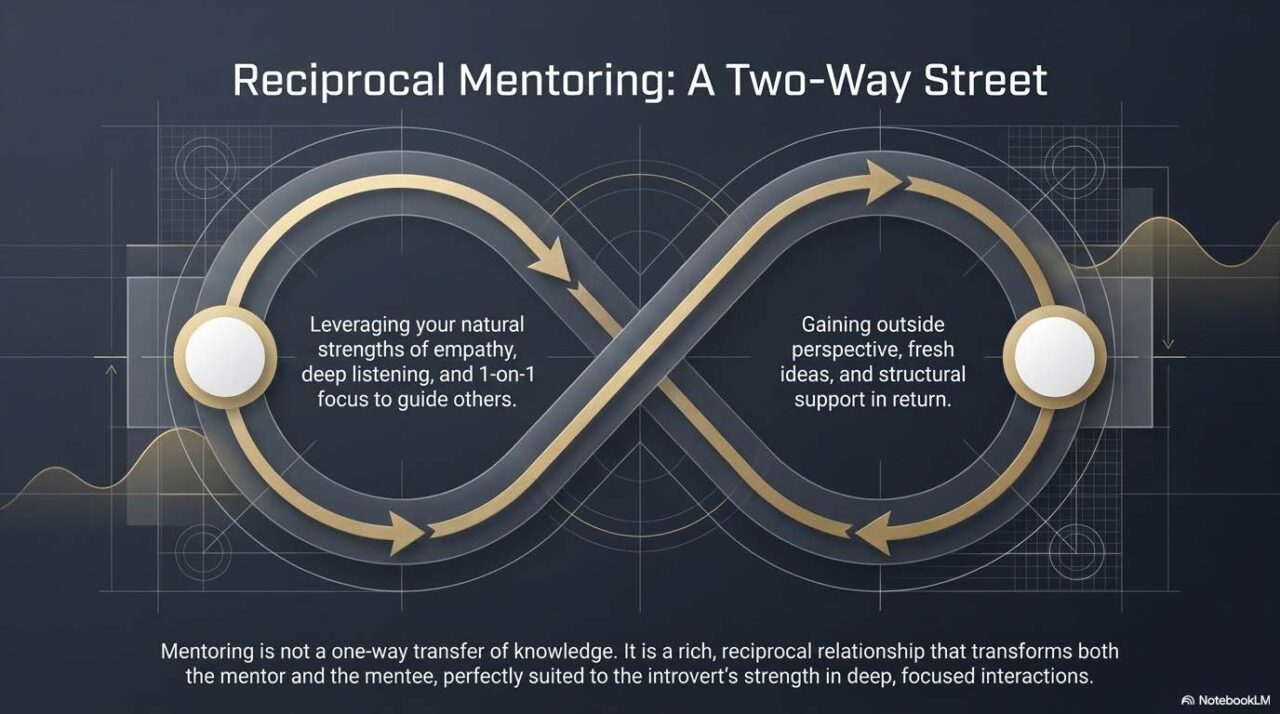
Reciprocal Mentoring: A Two-Way Street
I find that many of us in the quiet leadership community avoid traditional mentoring. Honestly, it often just feels like one more heavy, high-pressure commitment we don’t have the energy to maintain—or we worry we have to show up pretending to have all the answers.
But real mentoring isn’t a one-way download of knowledge. It’s a genuine, two-way relationship that supports both people. And it plays perfectly into our natural strengths because we already thrive in deep, focused, one-on-one conversations.
When you stop treating mentoring like a formal transaction, you can lean into what you already do best:
-
Listen instead of trying to perform: You don’t need a flawless script. Your natural empathy and ability to listen deeply are exactly what will help guide someone else through their challenges.
-
Swap fresh perspectives: It’s a true mutual exchange. You get to step outside your own bubble, grab fresh ideas, and find real structural support in return.
-
Take the pressure off: Because it’s a partnership, you don’t need to be the perfect expert. You’re just two people helping each other navigate the workplace
Bringing It All Together: The Quiet Ecosystem
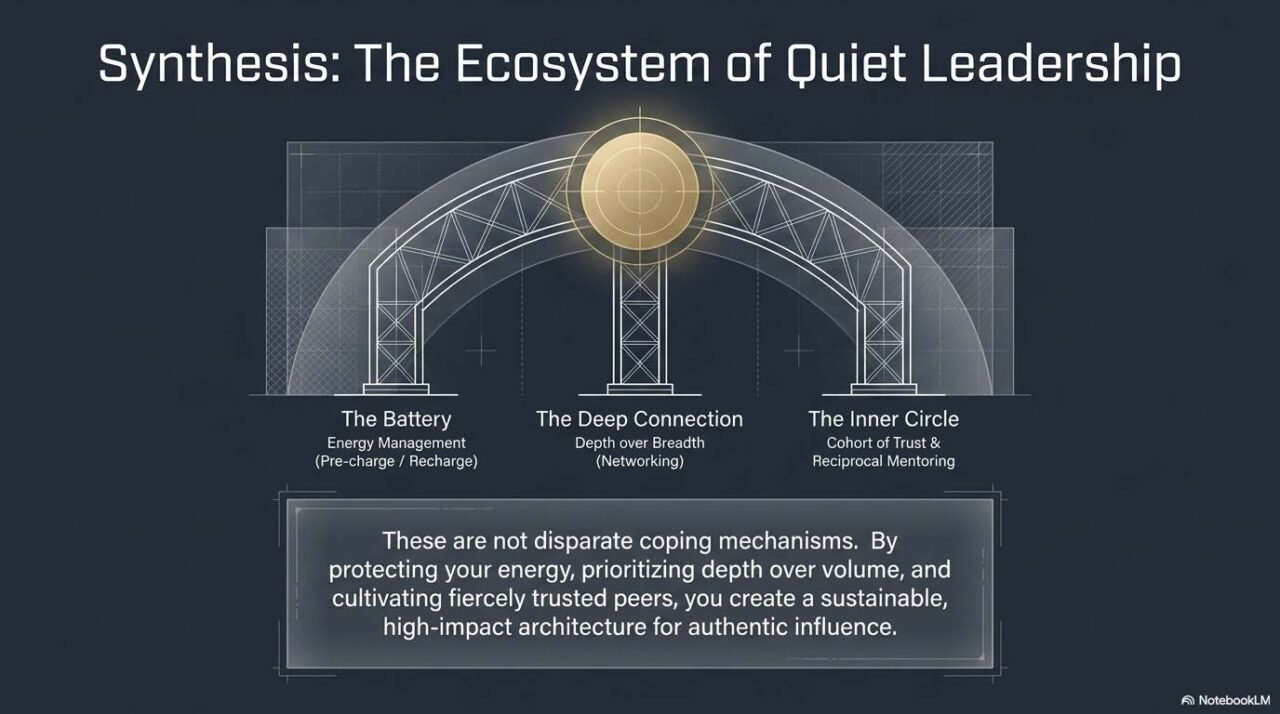
It’s easy to look at a slide deck like this and treat it like a menu of quick tips where you just pick and choose one or two. But these aren’t isolated coping mechanisms—they work together as a complete system.
Think about how they feed into each other:
-
Your Battery: Managing your energy through deliberate quiet time gives you the stamina to show up when it actually matters.
-
Your Focus: Shifting from “working the room” to having one or two deep, meaningful conversations keeps you from draining that battery in the first ten minutes.
-
Your Circle: Having a tiny cohort of trusted peers and reciprocal mentors gives you a safe space to recharge and get reality checks so you can keep going long-term.
When you protect your energy, focus on depth over crowd size, and surround yourself with a small circle of trusted people, you build a sustainable foundation for real influence. You don’t have to change who you are—you just have to work with your natural wiring.
Take the Next Step
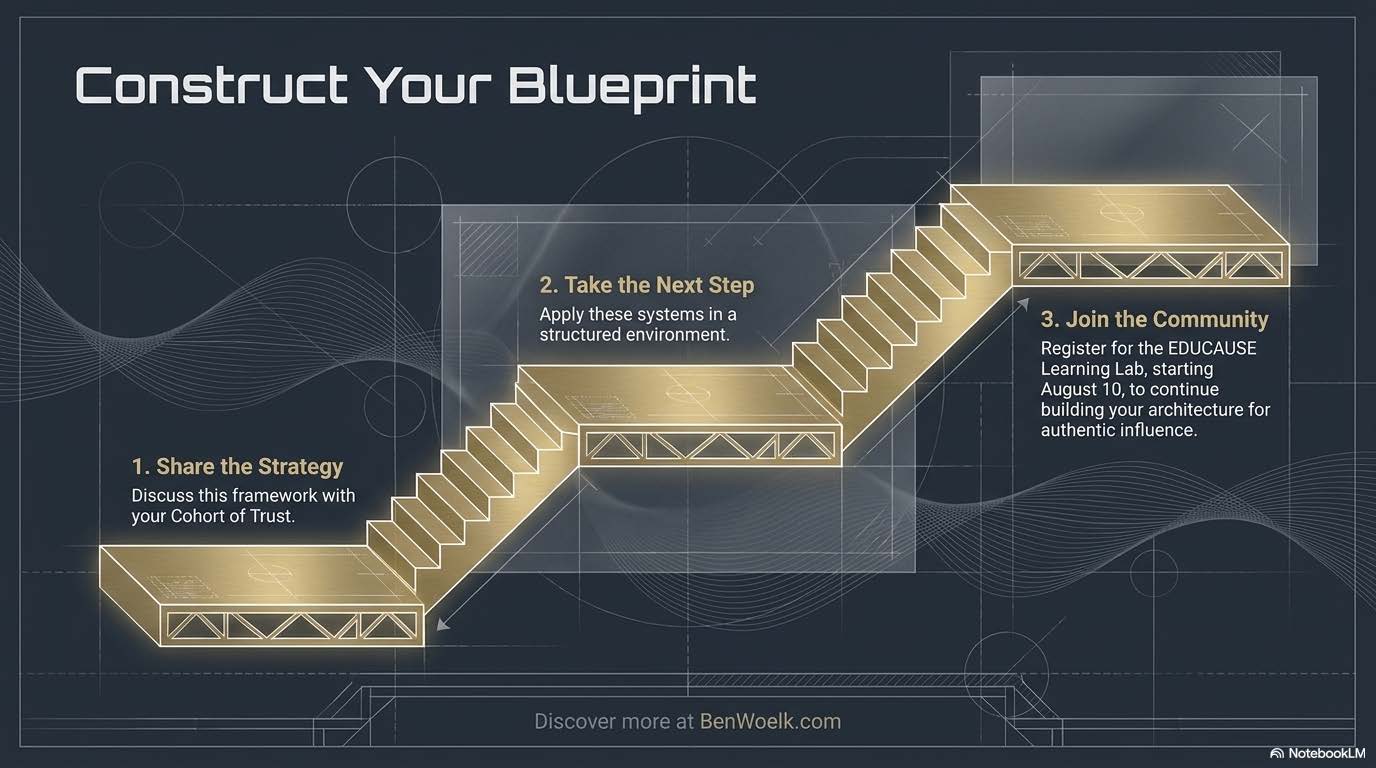
If you are looking for a structured, supportive space to practice these communication styles alongside a close-knit community of higher education peers, I invite you to join us.
-
🏫 Join the Community: Register for the upcoming EDUCAUSE Learning Lab, Quiet Leadership: Strategies for Influence and Impact (starting August 10). It’s an online, hands-on space open to both EDUCAUSE members and non-members. [Click here to secure your spot]
-
🎙️ Listen: Tune in to the full podcast conversation with Andrea Childress on the Hope for the Introvert podcast [Link to Podcast Page].
Quiet_Leadership_Blueprint PDF
A personal note: This blog post was drawn from prior podcast content, and was assisted with Gemini. The slides were created by NotebookLM.